

The first 30 days of addiction recovery are an important starting point for building a healthier life. At a professional De Addiction Centre in Bhubaneswar, treatment may include assessment, withdrawal support, counselling, structured routines, family involvement and relapse-prevention planning.
Recovery is different for every individual, so treatment duration and approach should be based on personal needs.
What Happens Before Treatment?
Before beginning rehabilitation, the treatment team may conduct:
- Substance-use assessment
- Physical health evaluation
- Mental-health assessment
- Family discussion
- Previous treatment and relapse history
- Individual recovery planning
This helps an Addiction Treatment Centre develop an appropriate treatment plan.
The First Week of Rehabilitation
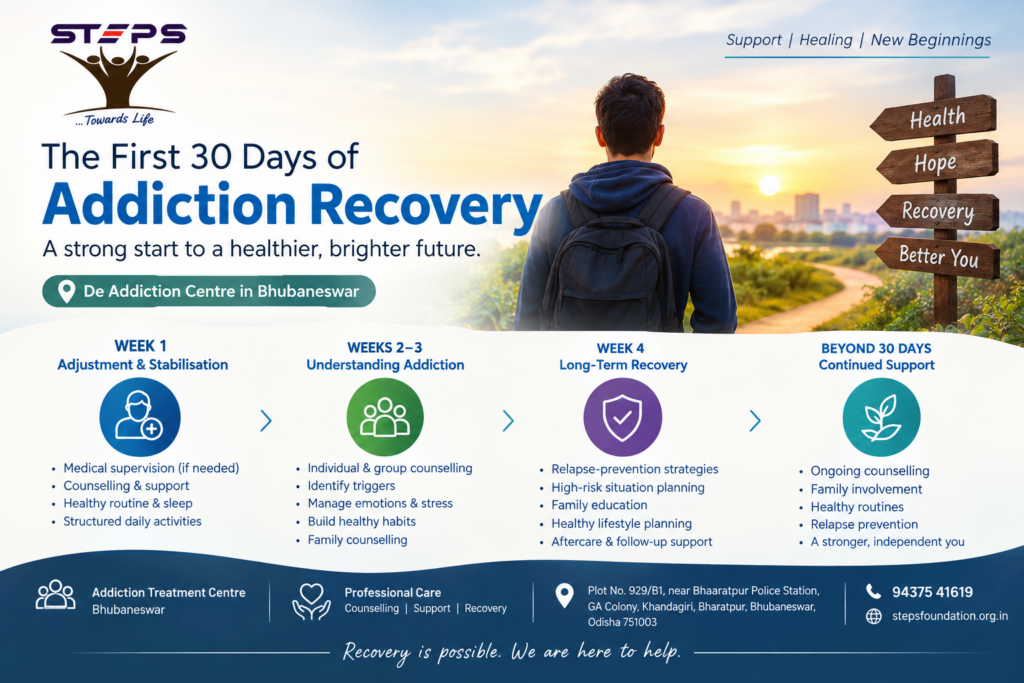
The first week generally focuses on adjustment and stabilisation. Depending on the substance and the individual’s health, professional or medical supervision may be required during withdrawal.
At a Drug Rehab Centre Bhubaneswar, the person may begin:
- Counselling
- Recovery education
- Healthy sleep and meal routines
- Structured daily activities
- Individual support
The aim is to create a safe and structured environment for recovery.
Weeks 2–3: Understanding Addiction
As treatment progresses, counselling and recovery activities may focus on understanding addiction and identifying factors that contribute to substance use.
This may include:
- Individual counselling
- Group sessions
- Identifying triggers
- Managing emotions and stress
- Developing healthy habits
- Family counselling
For people seeking an Alcohol Rehabilitation Centre Bhubaneswar, these areas can be important for addressing both substance use and the challenges that may contribute to continued drinking.
Week 4: Preparing for Long-Term Recovery
The fourth week may focus on preparing for life beyond residential treatment.
A recovery plan can include:
- Relapse-prevention strategies
- Identifying high-risk situations
- Family education
- Healthy lifestyle planning
- Follow-up counselling
- Aftercare planning
A Nasha Mukti Kendra Bhubaneswar or rehabilitation programme should ideally help individuals prepare for continuing recovery rather than focusing only on the initial treatment period.
Is 30 Days Enough for Addiction Recovery?
There is no fixed recovery timeline. Some people may need longer residential treatment, while others may require ongoing counselling, medical care or aftercare.
The first 30 days should be viewed as a foundation for recovery, not a guaranteed endpoint.
Why Choose Professional Addiction Treatment?
Professional treatment can provide a structured environment where addiction, emotional wellbeing and recovery planning can be addressed together.
If you are searching for Addiction Recovery in Bhubaneswar, Drug Rehabilitation Centre Bhubaneswar, or De Addiction Centre Bhubaneswar, consider the centre’s assessment process, professional support, counselling services, family involvement and aftercare programme.
STEPS Deaddiction & Mental Health Services
STEPS provides addiction recovery and mental-health support in Bhubaneswar, Odisha, with structured rehabilitation and counselling services.
Address: Plot No. 929/B1, near Bhaaratpur Police Station, GA Colony, Khandagiri, Bharatpur, Bhubaneswar, Odisha 751003
Phone: 94375 41619
Website: stepsfoundation.org.in
FAQs
What happens during addiction rehabilitation?
Treatment may include assessment, withdrawal management, counselling, structured routines, family support and relapse-prevention planning.
How long does addiction treatment take?
Treatment duration varies depending on the individual’s substance use, health, recovery progress and continuing-care needs.
Can families participate in treatment?
Yes. Family counselling and education can be an important part of addiction recovery when appropriate.
What happens after rehabilitation?
Aftercare may include counselling, follow-up support, healthy routines, family involvement and relapse-prevention strategies.