

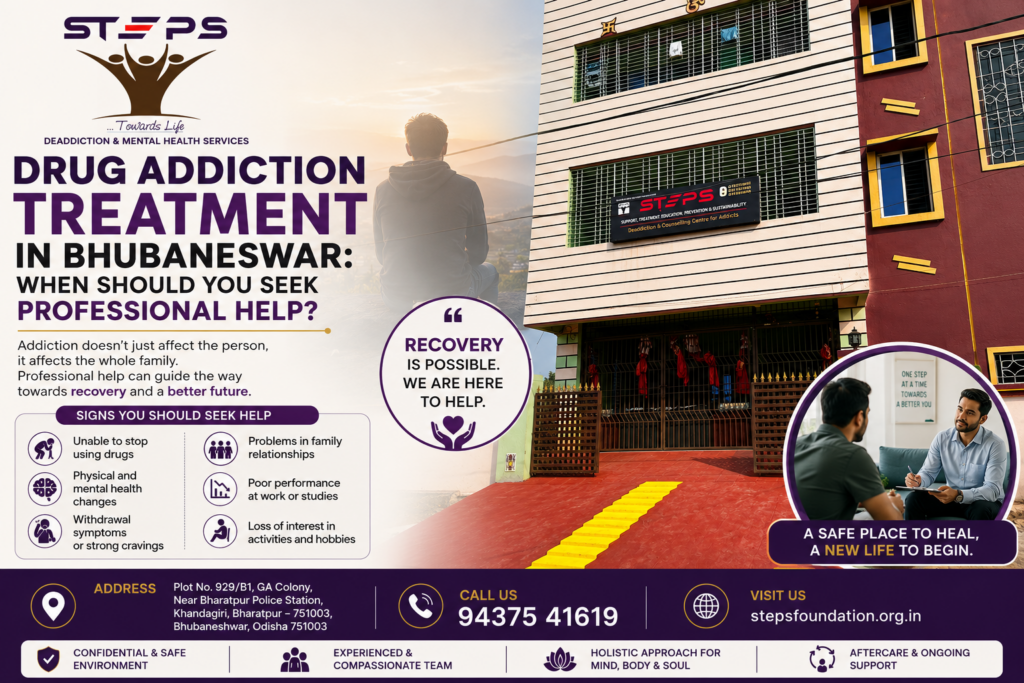
Drug addiction can gradually affect a person’s physical health, mental wellbeing, relationships, finances, work, and everyday life. One of the biggest challenges for families is recognising when drug use has moved beyond occasional or experimental use and professional treatment is needed.
If you or someone you care about is struggling with drug dependence, seeking help from a professional drug addiction treatment centre in Bhubaneswar can be an important step towards recovery.
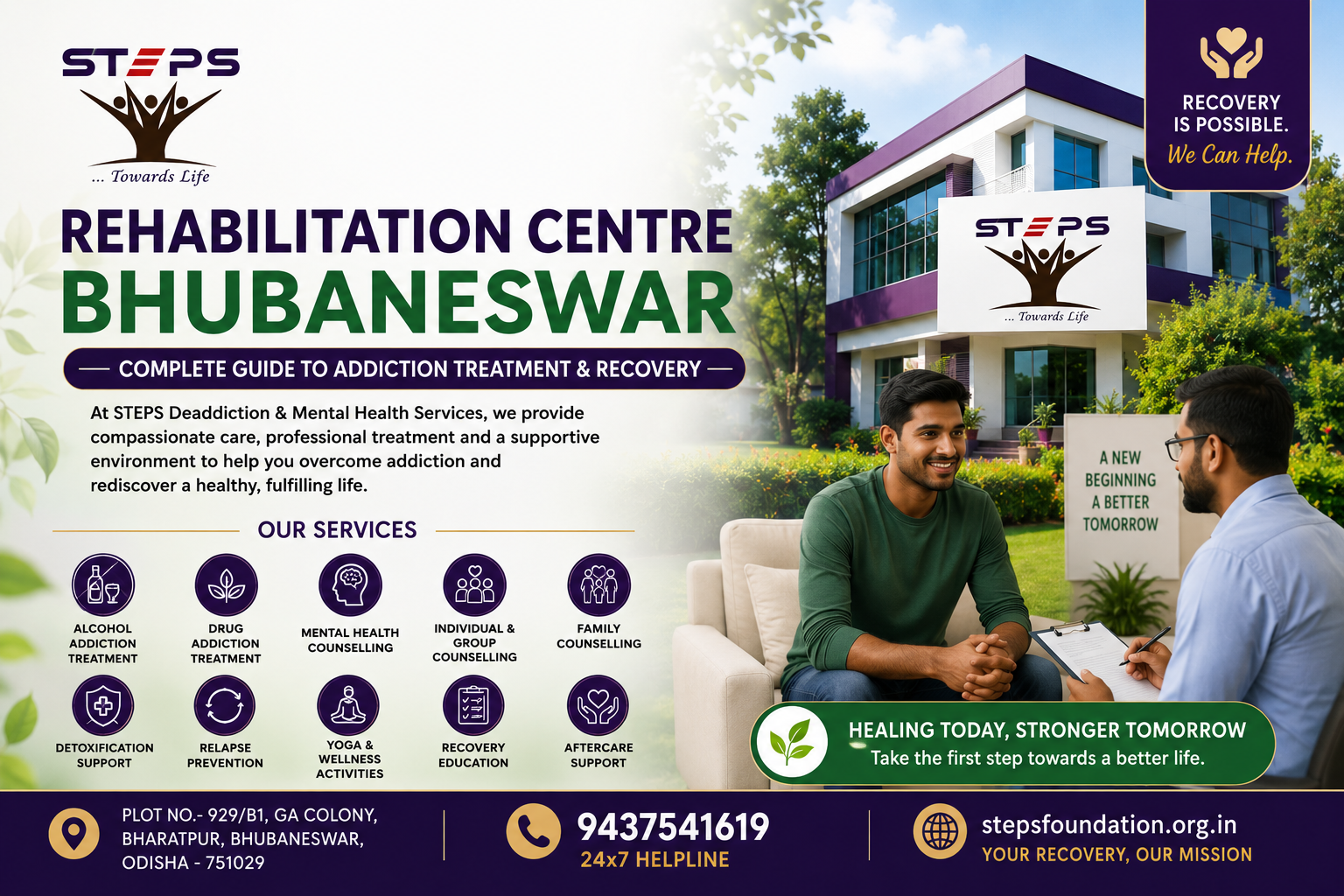
At STEPS Deaddiction & Mental Health Services, treatment focuses on providing structured support, counselling, recovery education, and an environment that encourages healthier routines and long-term recovery.
What Is Drug Addiction?
Drug addiction, also called substance use disorder, is a condition in which a person continues using a substance despite experiencing harmful consequences.
A person may want to stop using drugs but find it difficult because of cravings, withdrawal symptoms, psychological dependence, social influences, or underlying emotional difficulties.
Addiction is not simply a matter of willpower. Professional assessment can help determine the type and level of support required.
When Should You Seek Professional Drug Addiction Treatment?
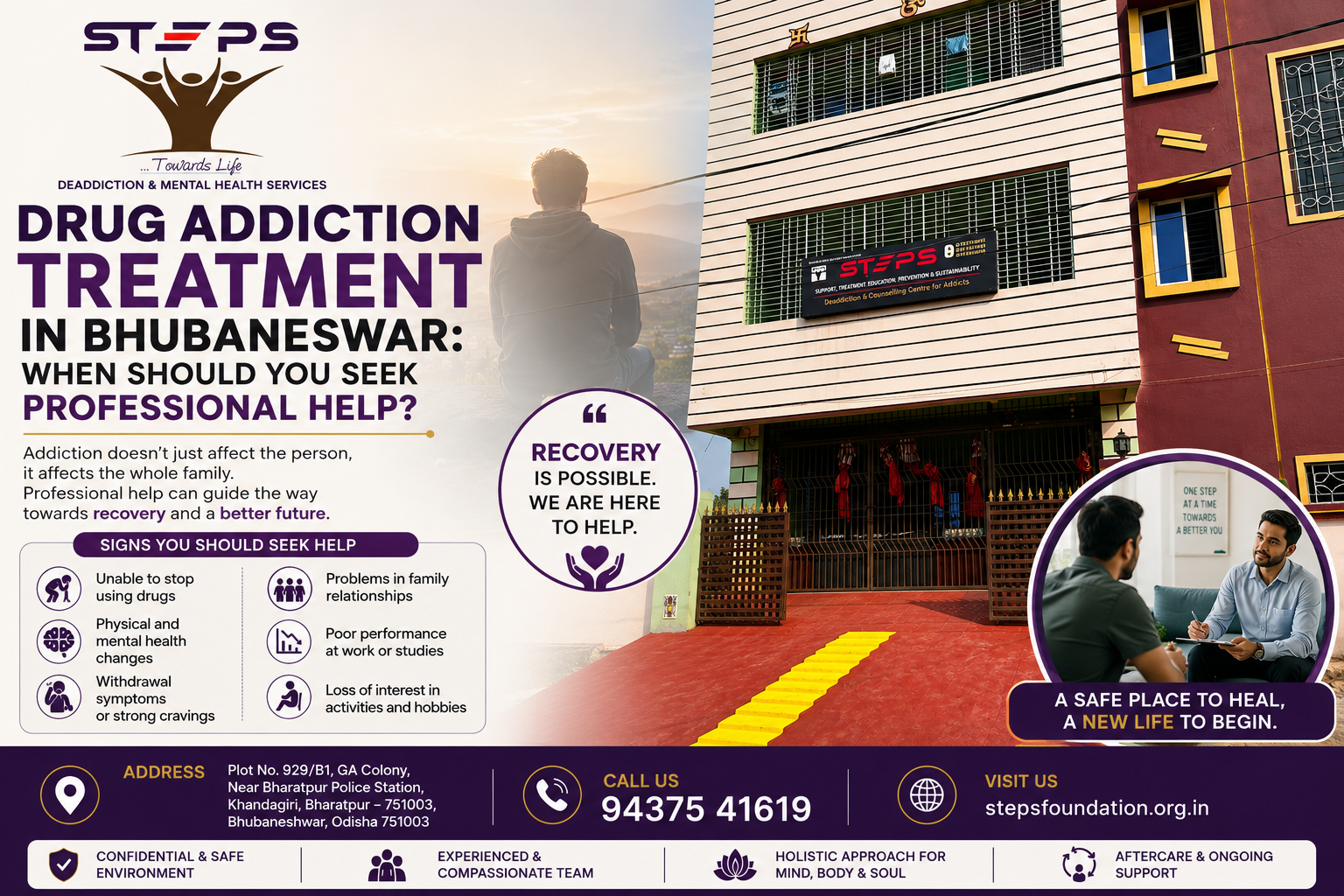
There is no need to wait until addiction becomes a severe crisis. Consider seeking professional help when drug use begins to interfere with a person’s health, relationships, responsibilities, or ability to control their behaviour.
1. When the Person Cannot Stop Using Drugs
Repeated attempts to quit or reduce drug use that do not last can be an important warning sign.
If someone says they want to stop but repeatedly returns to drug use, professional assessment and structured treatment may be helpful.
2. When Drug Use Is Affecting Physical Health
Changes in physical health can indicate that substance use is becoming harmful.
Possible warning signs may include:
- Changes in sleep or appetite
- Unexplained weight changes
- Persistent tiredness
- Poor physical wellbeing
- Neglect of personal hygiene
- Frequent health complaints
The appropriate treatment depends on the substance being used, the person’s health, and the severity of dependence.
3. When Mental and Emotional Health Is Changing
Drug use can be associated with changes in mood, behaviour, concentration, sleep, and emotional wellbeing.
A person may become unusually anxious, irritable, withdrawn, restless, or emotionally unstable.
When substance use and mental-health concerns occur together, professional support can help address both areas rather than focusing only on stopping drug use.
4. When Family Relationships Are Breaking Down
Addiction often affects the entire family.
Frequent arguments, secrecy, loss of trust, financial problems, social withdrawal, or changes in behaviour can create significant stress at home.
Family counselling can help relatives understand addiction and develop more constructive ways to support recovery.
5. When Work, Education or Daily Responsibilities Are Being Neglected
Drug addiction can gradually affect concentration, motivation, attendance, performance, and responsibility.
If a person is repeatedly missing work or college, failing to meet important responsibilities, or losing interest in activities they previously enjoyed, it may be time to consider professional help.
6. When There Are Strong Cravings or Withdrawal Concerns
Cravings can make it difficult for a person to maintain abstinence, particularly when they encounter people, places, emotions, or situations associated with previous drug use.
Some substances can also cause significant withdrawal symptoms.
Stopping certain drugs suddenly may carry medical risks, depending on the substance, pattern of use, and the individual’s health. Professional assessment is therefore important before deciding how withdrawal should be managed.
What Happens During Drug Addiction Treatment?
A rehabilitation programme is not the same for everyone. Treatment should be based on an individual’s substance-use history, health, psychological needs, family situation, and recovery goals.
A structured programme may include:
Assessment and Treatment Planning
The initial assessment helps understand the person’s substance use, physical and psychological concerns, previous treatment experiences, and recovery needs.
Detoxification Support
Where clinically appropriate, withdrawal and detoxification may require professional monitoring and medical support.
Detoxification is only one part of recovery. Completing detox does not by itself address the behavioural, emotional, and social factors associated with addiction.
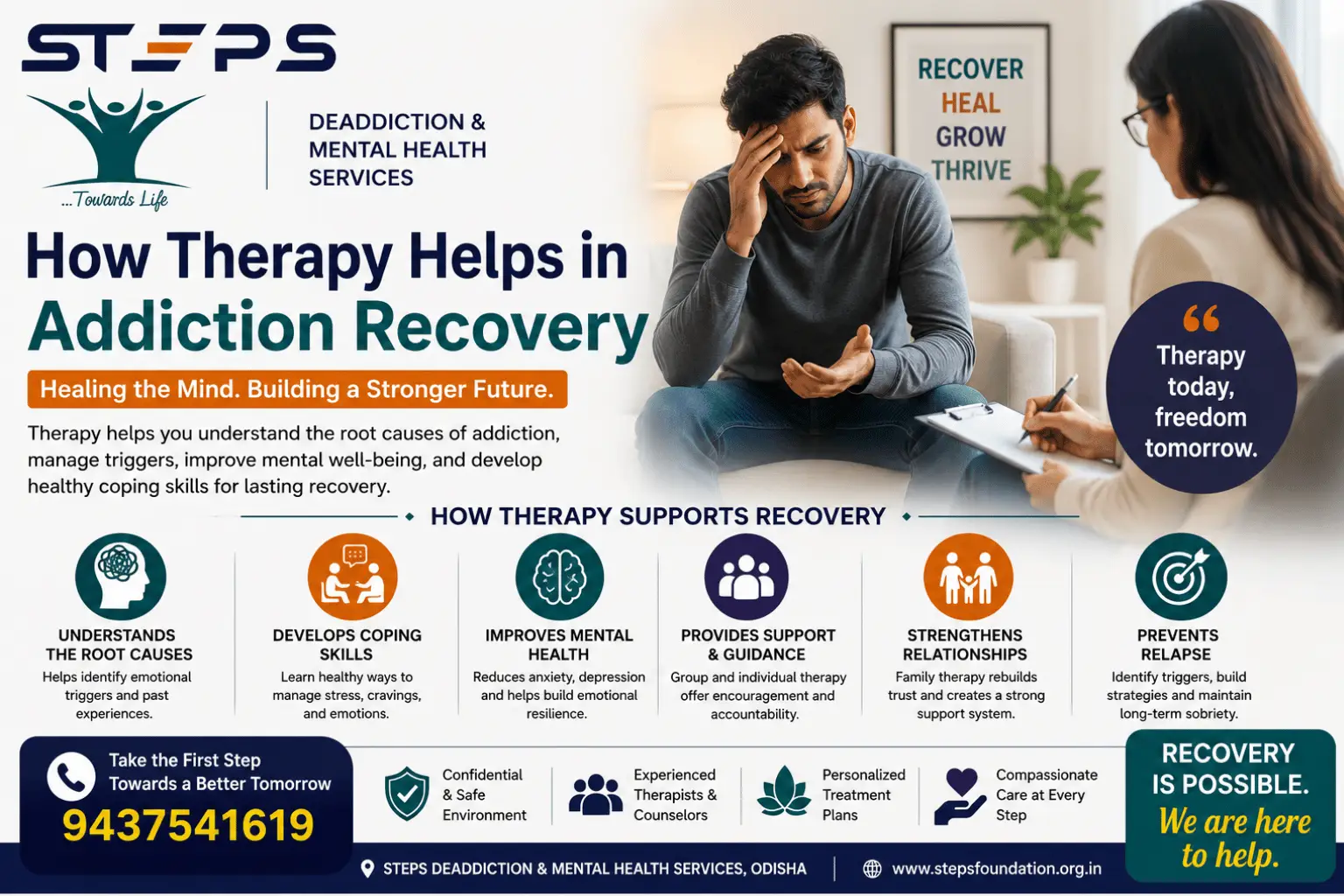
Individual Counselling
One-to-one counselling can help individuals explore:
- Reasons and triggers for drug use
- Cravings and high-risk situations
- Emotional difficulties
- Behaviour patterns
- Motivation for recovery
- Healthy coping strategies
Group Counselling
Group sessions can provide a structured environment for recovery-focused learning and peer support. Individuals may learn from others’ experiences while developing communication and coping skills.
Family Counselling
Family involvement can be an important part of recovery. Counselling can help families understand addiction, improve communication, establish healthy boundaries, and support the person’s recovery without enabling harmful behaviours.
Wellness and Healthy Routines
Recovery involves more than avoiding drugs. Structured daily routines, physical activity, yoga, meditation, recreational activities, and other healthy practices may support overall wellbeing as part of an appropriate treatment programme.
Relapse Prevention
Relapse prevention focuses on identifying triggers and developing practical strategies for dealing with cravings, stress, social pressure, and high-risk situations.
The goal is to help individuals build skills that can continue to support recovery after completing residential treatment.
Why Early Treatment Matters
Many families wait because they hope the person will stop using drugs independently. Others may worry about stigma or believe treatment is only necessary when addiction becomes severe.
However, seeking professional guidance early can help families understand the situation and identify appropriate treatment options.
Recovery is a process. The earlier a person receives appropriate support, the sooner they can begin working towards healthier routines and long-term change.
How to Choose a Drug Addiction Treatment Centre in Bhubaneswar
When looking for a drug rehabilitation centre in Bhubaneswar, families should consider:
- Professional assessment and supervision
- Individualised treatment planning
- Counselling and therapy services
- Family involvement
- Withdrawal and detoxification support where appropriate
- Relapse-prevention planning
- Mental-health support
- A safe and structured environment
- Aftercare and continuing recovery support
It is also important to discuss the person’s substance use and health history honestly with the treatment team so that appropriate care can be planned.
Drug Addiction Treatment in Bhubaneswar at STEPS
At STEPS Deaddiction & Mental Health Services, we provide structured support for individuals dealing with drug addiction and related mental-health concerns.
Our approach may include assessment, counselling, family support, wellness activities, recovery education, and relapse-prevention planning based on individual needs.
If you are searching for Drug Addiction Treatment in Bhubaneswar, a Drug Rehabilitation Centre in Bhubaneswar, De-Addiction Centre in Bhubaneswar, or Nasha Mukti Kendra in Bhubaneswar, professional guidance can help you understand the next step.
Take the First Step Towards Recovery
You do not have to wait for addiction to cause further damage before asking for help.
If drug use is becoming difficult to control or is affecting health, relationships, work, education, or everyday life, consider speaking with a qualified treatment professional.
STEPS Deaddiction & Mental Health Services
Plot No. 929/B1, GA Colony, Near Bharatpur Police Station, Khandagiri, Bharatpur, Bhubaneswar, Odisha – 751003
Phone: 94375 41619
Website: stepsfoundation.org.in
Freedom from addiction begins with one step. Reach out for professional support today.
Frequently Asked Questions
When should someone seek drug addiction treatment?
Professional help should be considered when drug use becomes difficult to control, causes health or emotional problems, affects relationships or responsibilities, or leads to repeated attempts to quit without lasting success.
Can drug addiction be treated?
Yes. Addiction is treatable, although recovery can take time and may require ongoing support. Treatment plans vary according to the substance used, severity of dependence, health, and individual needs.
Is detoxification enough to recover from drug addiction?
No. Detoxification can address withdrawal and help establish physical stability, but long-term recovery may also require counselling, behavioural support, family involvement, relapse prevention, and continuing care.
Should a person stop drugs suddenly?
That depends on the substance, amount and pattern of use, and the individual’s health. Some withdrawal syndromes can be medically serious. Professional assessment is recommended before stopping a substance when dependence is suspected.
Can families participate in addiction treatment?
Yes. Family counselling can help relatives understand addiction, improve communication, establish appropriate boundaries, and provide healthier recovery support.
How long does drug rehabilitation take?
There is no single treatment duration that works for everyone. The appropriate length depends on the person’s substance use, health, treatment needs, progress, and aftercare plan.