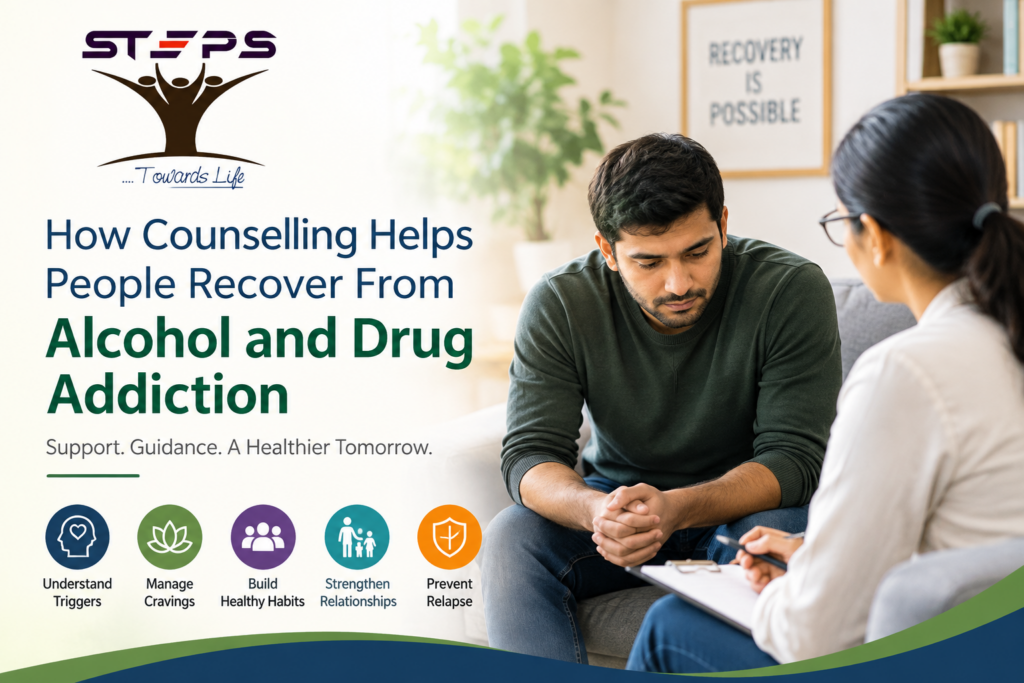
Addiction counselling in Bhubaneswar can play an important role in helping people recover from alcohol and drug addiction. Recovery is not only about stopping substance use. It can also involve understanding triggers, managing cravings, improving coping skills, addressing emotional difficulties, rebuilding relationships, and preparing for life after rehabilitation.
At STEPS Deaddiction & Mental Health Services, counselling is part of a structured recovery approach that may include assessment, individual counselling, group sessions, family counselling, wellness activities, and relapse-prevention support.
For people and families searching for a De Addiction Centre in Bhubaneswar, understanding the role of counselling can help them make more informed decisions about treatment.
What Is Addiction Counselling?
Addiction counselling in Bhubaneswar refers to structured psychological and behavioural support for people experiencing problems related to alcohol or drug use.
Counselling can provide a safe environment where a person can discuss difficulties related to substance use and work towards practical recovery goals.
A counsellor may help explore:
- Reasons substance use became difficult to control
- Alcohol or drug cravings
- Situations that trigger substance use
- Stress, anger, loneliness, or emotional difficulties
- Unhelpful thoughts and behaviours
- Relationship and family concerns
- Relapse risks
- Healthy coping strategies
- Goals for life after rehabilitation
Counselling is not simply about telling someone to stop drinking or using drugs. It focuses on understanding patterns and developing skills that can support healthier choices.
According to the National Institute on Alcohol Abuse and Alcoholism (NIAAA), behavioural treatments can involve counselling designed to help people develop coping skills, manage triggers, establish goals, and strengthen social support.
Why Is Addiction Counselling Important in Recovery?
Alcohol and drug addiction can affect behaviour, emotions, relationships, family life, work, and overall wellbeing. Simply removing access to a substance may not address all the psychological and behavioural challenges associated with addiction.
This is why counselling may be an important part of a comprehensive addiction treatment programme.
1. Addiction Counselling Helps Identify Triggers
A trigger is something that can increase the urge to drink alcohol or use drugs.
Triggers are different for every individual. They may include:
- Stress at home or work
- Family arguments
- Certain friends or social situations
- Financial difficulties
- Loneliness
- Anxiety or sadness
- Places associated with substance use
- Exposure to alcohol or drugs
- Difficult memories or emotional experiences
During addiction counselling in Bhubaneswar, individuals can learn to recognise their personal triggers and develop strategies for managing them.
NIAAA also identifies recognising and coping with triggers as an important part of behavioural treatment for alcohol problems.
2. Counselling Helps Manage Alcohol and Drug Cravings
Cravings can be a challenging part of recovery.
A craving does not necessarily mean that a person has to act on it. Counselling can help individuals understand their craving patterns and practise ways of responding differently.
Depending on the person’s treatment plan, strategies may include:
- Recognising craving patterns
- Changing the immediate environment
- Using healthy distractions
- Relaxation and breathing exercises
- Speaking with a trusted support person
- Challenging unhelpful thoughts
- Creating a relapse-prevention plan
The goal is to develop practical skills that can be used during rehabilitation and after returning to everyday life.
3. Counselling Addresses Thoughts and Behaviours
Addiction can become connected with repeated patterns of thinking and behaviour.
For example, a person may think:
“I cannot handle stress without alcohol.”
Or:
“One drink will not make a difference.”
Counselling can help individuals examine these thoughts and consider healthier responses.
Cognitive Behavioural Therapy (CBT) is one evidence-based behavioural approach used in addiction treatment. It can help people recognise connections between thoughts, feelings, situations, and behaviours and develop healthier coping responses.
NIAAA describes CBT as an approach that can help people identify situations and feelings associated with problematic drinking and develop skills for managing triggers and stress.
4. Addiction Counselling Supports Emotional Wellbeing
Some individuals use alcohol or drugs while attempting to cope with difficult emotions or life experiences.
Stress, anxiety, grief, trauma, depression, relationship difficulties, and other emotional challenges can occur alongside substance use.
Counselling provides an opportunity to discuss these concerns and develop healthier coping mechanisms.
When significant mental health symptoms are present, professional assessment may be appropriate. Addiction treatment and mental health care may need to be coordinated when both conditions occur.
For this reason, families looking for a rehabilitation centre in Bhubaneswar may wish to ask how the centre addresses both addiction and mental wellbeing.
You can learn more about this connection in our related resource:
Mental Health & De-Addiction Centre in Odisha STEPS Mental Health & De-Addiction Centre
5. Individual Counselling Provides Personalised Support
Every person’s experience with addiction is different.
Individual counselling gives the person and counsellor an opportunity to focus on specific circumstances, recovery goals, challenges, and progress.
Sessions may explore:
- Substance-use history
- Recovery goals
- Cravings
- Emotional difficulties
- Family concerns
- Motivation for change
- Coping strategies
- Relapse warning signs
- Plans for life after rehabilitation
This personalised approach can make counselling more relevant to an individual’s recovery needs.
6. Group Counselling Can Reduce Isolation
Addiction can sometimes leave people feeling isolated or misunderstood.
Group counselling allows people in recovery to communicate with others experiencing similar challenges.
Depending on the programme, group sessions may help participants:
- Share experiences
- Practise communication
- Learn from others
- Receive encouragement
- Develop social skills
- Understand common recovery challenges
- Recognise that recovery is a process
A professionally facilitated group environment can provide structure while maintaining appropriate confidentiality and respect.
Professionally led group counselling is also recognised as one of the behavioural treatment formats used in alcohol treatment.
7. Family Counselling Helps Strengthen Recovery Support
Addiction can affect the entire family.
Relatives may experience worry, frustration, disappointment, financial stress, communication problems, or emotional exhaustion.
Family counselling can help family members better understand addiction and learn healthier ways to communicate and support recovery.
It may focus on:
- Understanding addiction
- Improving communication
- Establishing healthy boundaries
- Rebuilding trust
- Managing family conflict
- Avoiding behaviours that unintentionally support harmful substance use
- Preparing for life after rehabilitation
Family involvement can be particularly useful when the home environment plays an important role in continuing recovery.
NIAAA also identifies couples and family counselling as behavioural treatment approaches that can address relationships, communication, and relapse triggers.
8. Counselling Helps With Relapse Prevention
Completing rehabilitation does not necessarily mean that recovery is finished.
Returning to everyday life can bring new stresses, environments, relationships, and situations that may increase the risk of returning to substance use.
Relapse-prevention counselling can help individuals prepare for these situations.
A personal recovery plan may follow this structure:
Trigger → Early warning sign → Coping strategy → Support person → Action plan
Potential warning signs may include:
- Increasing stress
- Social isolation
- Returning to unhealthy routines
- Reconnecting with people associated with substance use
- Increasing cravings
- Family conflict
- Stopping treatment or support
Recognising warning signs early can encourage a person to seek support before the situation becomes more difficult.
You can also read our related guide:
Relapse Prevention: How to Stay Addiction-Free After Rehab — available through the STEPS recovery resources. STEPS Foundation Recovery Resources
9. Counselling Can Strengthen Motivation for Recovery
People enter addiction treatment with different levels of motivation.
Some individuals may actively want to change, while others may feel uncertain about treatment or may have entered treatment following concerns expressed by family members.
Counselling can provide an opportunity to explore personal reasons for change, understand the effects of continued substance use, and establish realistic recovery goals.
Motivational approaches are among the behavioural treatments described by NIAAA for alcohol use disorder.
10. Counselling Helps Build a Healthier Routine
Long-term recovery involves more than avoiding alcohol or drugs.
A healthier routine may include:
- Regular sleep
- Nutritious meals
- Physical activity
- Stress-management practices
- Healthy relationships
- Meaningful activities
- Family involvement
- Continuing professional support when appropriate
Counselling can help individuals identify realistic goals and gradually build routines that support overall wellbeing.
What Happens During Addiction Counselling in Bhubaneswar?
The counselling process varies according to the person’s needs and treatment setting.
A structured programme may involve several stages.
Step 1: Assessment
The treatment team learns about substance use, physical and psychological wellbeing, family circumstances, previous treatment, and recovery goals.
Step 2: Identifying Recovery Needs
The counsellor and treatment team identify areas requiring attention, such as cravings, emotional difficulties, relationships, coping skills, and relapse risks.
Step 3: Developing a Recovery Plan
A personalised plan can be developed according to the individual’s circumstances.
Step 4: Regular Counselling
Individual and/or group sessions can help the person work through recovery challenges and practise new coping strategies.
Step 5: Family Involvement
Where appropriate, family counselling can help establish a healthier support system.
Step 6: Relapse-Prevention Planning
Before completing rehabilitation, individuals can develop a practical plan for maintaining recovery after treatment.
Can Counselling Alone Treat Alcohol or Drug Addiction?
Treatment needs vary from person to person.
Some individuals may require medical assessment, supervised withdrawal management, medication, psychological treatment, rehabilitation, counselling, or a combination of these approaches.
For some substances, withdrawal can be medically dangerous. Alcohol withdrawal can sometimes become severe or life-threatening, so people with significant alcohol dependence should seek appropriate medical advice rather than attempting sudden withdrawal without professional assessment.
The World Health Organization recognises psychosocial interventions as part of evidence-based management of alcohol use disorders, including alongside other appropriate forms of care.
For drug addiction, NIDA also describes behavioural therapies such as CBT, motivational approaches, and group therapy as components that may be used in treatment.
Therefore, counselling should generally be considered one component of a comprehensive treatment plan, rather than a replacement for medical care when medical care is required.
How Can Families Support Addiction Recovery?
Families can play an important role without taking responsibility for the entire recovery process.
Helpful steps include:
- Encourage professional treatment.
- Listen without unnecessary judgement.
- Learn about addiction and recovery.
- Support healthy routines.
- Maintain appropriate boundaries.
- Avoid covering up harmful consequences of substance use.
- Participate in family counselling when recommended.
- Encourage continued professional support after rehabilitation.
Families may also need emotional support of their own.
When Should Someone Seek Addiction Treatment?
Professional help may be appropriate when alcohol or drug use becomes difficult to control or begins affecting important areas of life.
Possible warning signs include:
- Repeated unsuccessful attempts to stop or reduce substance use
- Strong cravings
- Increasing tolerance
- Withdrawal symptoms
- Neglecting work, education, or family responsibilities
- Continuing substance use despite health or relationship problems
- Spending significant time obtaining or recovering from substance use
- Repeated relapse
- Risky behaviour while under the influence
A person does not necessarily need to wait until the problem becomes severe before seeking help.
Addiction Counselling at STEPS Deaddiction & Mental Health Services
At STEPS Deaddiction & Mental Health Services in Bhubaneswar, counselling is an important part of a structured recovery programme.
Depending on individual needs, the programme may include:
- Individual counselling
- Group and interactive sessions
- Family counselling
- Relapse-prevention support
- Yoga and relaxation practices
- Professional guidance
- Addiction recovery support
The focus is on providing a supportive environment where individuals can work towards recovery with dignity, compassion, and appropriate professional care.
STEPS also provides information about addiction treatment and rehabilitation services in Odisha.
Frequently Asked Questions About Addiction Counselling
How does addiction counselling help with alcohol addiction?
Addiction counselling can help a person identify triggers, understand cravings, develop healthier coping strategies, address emotional difficulties, strengthen motivation, and prepare for situations that may increase relapse risk.
Can addiction counselling help with drug addiction?
Yes. Counselling is commonly included in comprehensive treatment for substance use disorders. The type and intensity of counselling depend on the person’s substance use, health, psychological needs, and treatment plan.
Is family counselling important in addiction recovery?
Family counselling can help improve communication, establish healthy boundaries, rebuild relationships, and help family members understand how to support recovery appropriately.
How long does addiction counselling take?
There is no single duration that applies to everyone. Counselling may continue during residential rehabilitation and may also form part of continuing care after treatment.
Can someone recover from addiction without counselling?
Treatment needs vary. Some people require several forms of support, including medical care, medication, counselling, behavioural therapies, rehabilitation, peer support, or continuing care. A qualified professional can help determine an appropriate treatment plan.
What is relapse-prevention counselling?
Relapse-prevention counselling helps individuals identify triggers and warning signs and develop practical strategies for managing cravings, stress, high-risk situations, and other recovery challenges.
Conclusion: Take the First Step Towards Recovery
Addiction counselling in Bhubaneswar can be an important part of recovery from alcohol and drug addiction. It can help individuals understand substance-use patterns, manage cravings, develop healthier coping skills, strengthen relationships, and prepare for life after rehabilitation.
Recovery is a process rather than a single event. A personalised treatment plan may combine counselling with medical care, behavioural support, family involvement, relapse prevention, and continuing care according to individual needs.
If you or someone in your family is struggling with alcohol or drug addiction, professional assessment can help you understand the available treatment options.
STEPS Deaddiction & Mental Health Services – Bhubaneswar
Phone: 94375 41619