

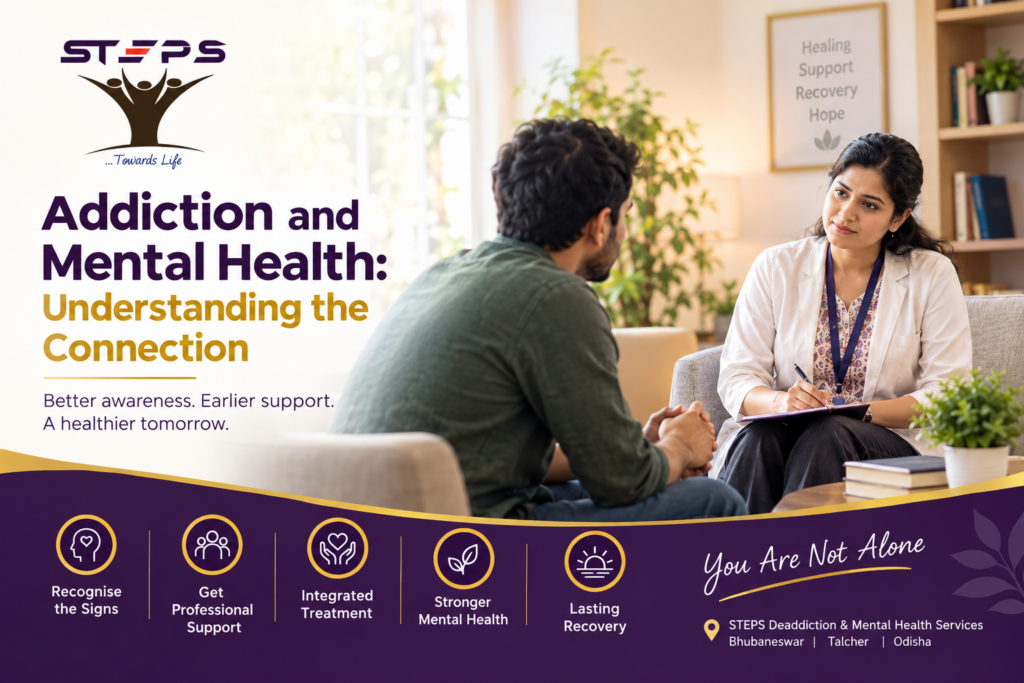
When Addiction and Mental Health Overlap
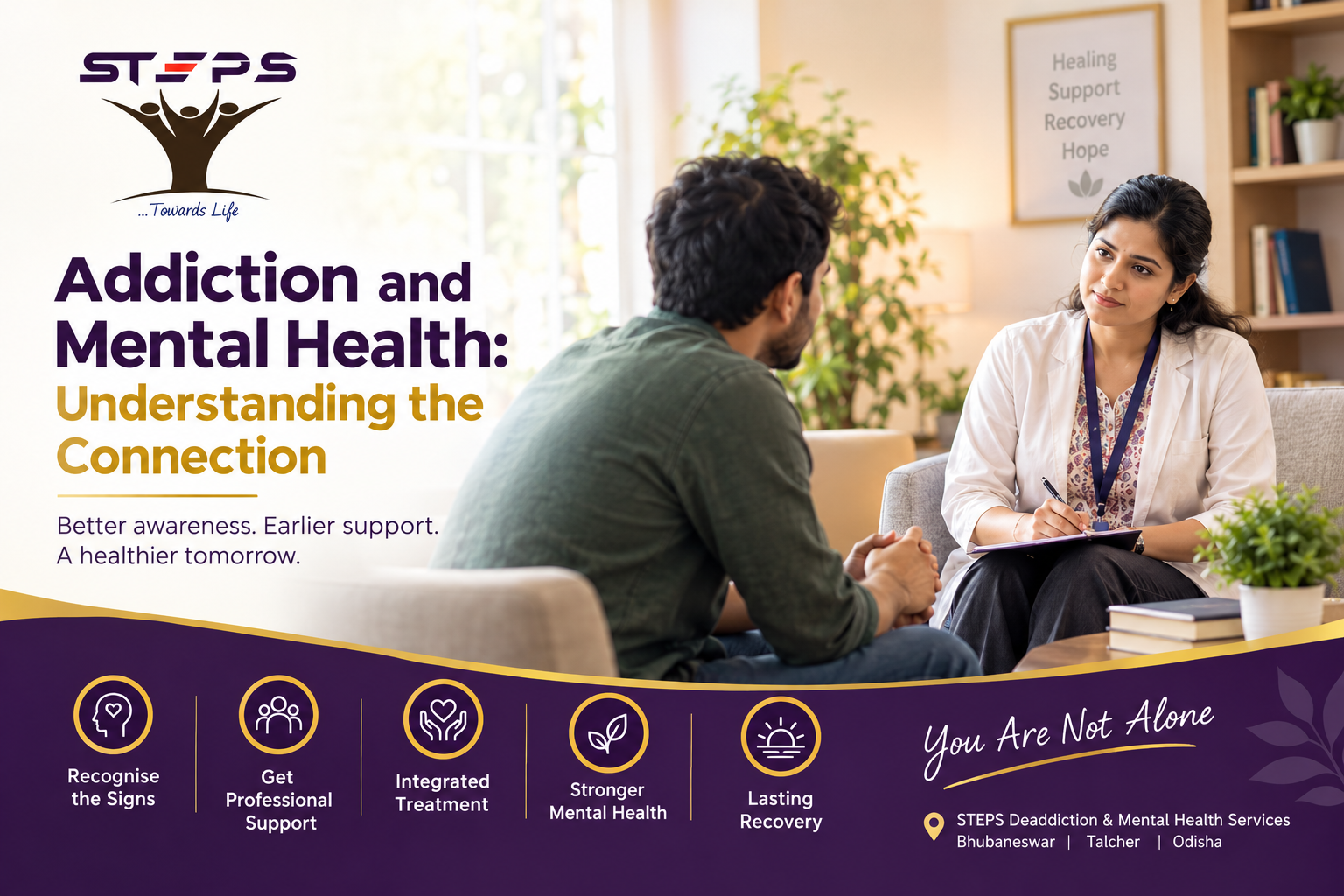
Addiction affects more than physical health. It can influence emotions, relationships, sleep, work, and everyday life. At the same time, mental health difficulties such as anxiety, depression, or trauma can make it harder for someone to manage alcohol or drug use.
This connection can leave individuals and families feeling confused, worried, or unsure where to turn for help. They may wonder whether mental health problems lead to addiction or whether substance use causes emotional distress.
The reality is that addiction and mental health can affect each other in several ways. Understanding this relationship is an important step toward finding suitable treatment and building a healthier future.
At STEPS Deaddiction & Mental Health Services, we believe recovery should address the whole person, including emotional well-being, physical health, family relationships, and long-term support.
Table of Contents
- Key takeaways
- How are addiction and mental health connected?
- Common symptoms and warning signs
- Causes and risk factors
- Diagnosis and professional assessment
- Treatment options
- Prevention and lifestyle tips
- Myths vs. facts
- Frequently asked questions
- Summary and next steps
Key Takeaways
- Addiction and mental health conditions can occur together.
- Anxiety, depression, trauma, and substance use may influence one another.
- Addiction is a complex health condition, not a personal weakness.
- Professional assessment can help identify individual treatment needs.
- Integrated care, family support, and ongoing recovery planning can support long-term well-being.
How Are Addiction and Mental Health Connected?
Addiction involves continued substance use or certain behaviours despite harmful consequences. This article focuses on substance-related problems, including alcohol and drug addiction.
Mental health describes emotional, psychological, and social well-being. It influences how people think, feel, cope with stress, and relate to others.
1. Mental health difficulties may increase substance use
Someone experiencing anxiety, depression, loneliness, or emotional trauma may turn to alcohol or drugs to cope with difficult feelings. Substances may provide temporary relief, but this relief often fades.
Over time, repeated use can become difficult to control and may worsen the original emotional difficulties.
2. Substance use can affect mental well-being
Alcohol and drugs can influence brain function, mood, sleep, memory, and decision-making. Some people experience increased anxiety, low mood, irritability, or suspicious thoughts during or after substance use.
Heavy or prolonged use can also contribute to serious mental health difficulties. Withdrawal may cause additional symptoms and can sometimes be medically dangerous.
3. Both conditions may share risk factors
Family history, chronic stress, traumatic experiences, social isolation, and difficult life circumstances may increase vulnerability to substance use problems and mental health conditions.
However, everyone’s experience is different. Having a mental health condition does not mean someone will develop an addiction, and addiction does not automatically mean someone has a separate mental illness.
Common Symptoms and Warning Signs
Recognizing changes early can help individuals and families seek support before problems become more severe.
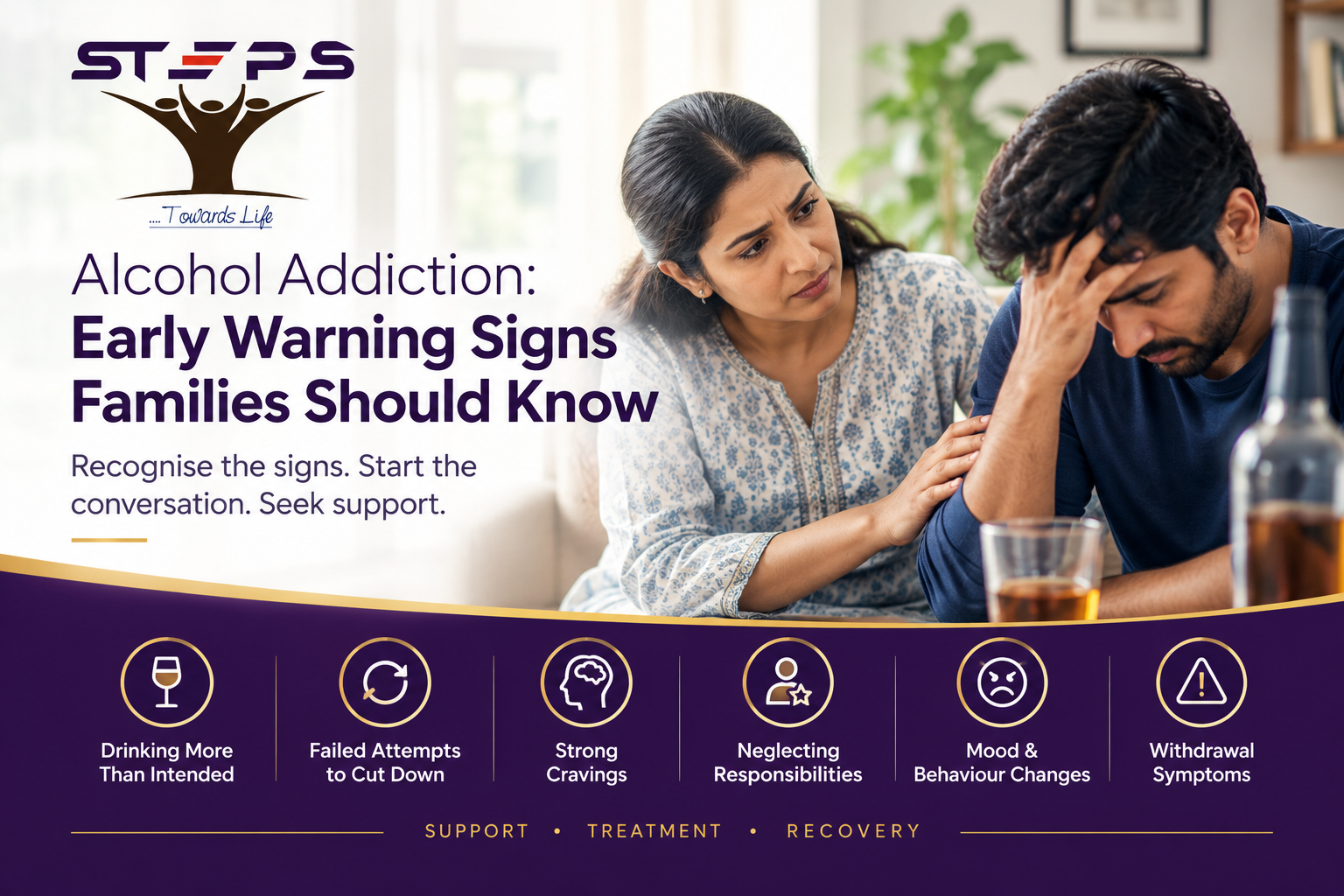
Possible signs of addiction
- Strong urges to drink alcohol or use drugs.
- Difficulty controlling how much or how often a substance is used.
- Needing more of a substance to experience the same effect.
- Neglecting work, education, family, or personal responsibilities.
- Continuing to use substances despite health or relationship problems.
- Experiencing withdrawal symptoms when reducing or stopping use.
Possible mental health warning signs
- Persistent sadness, hopelessness, or loss of interest.
- Frequent worry, panic, or feelings of fear.
- Sudden changes in sleep, appetite, or energy.
- Irritability, emotional withdrawal, or difficulty concentrating.
- Avoiding friends, family, or everyday activities.
- Feeling overwhelmed, worthless, or unable to cope.
These symptoms can have different causes and do not establish a diagnosis on their own. A qualified healthcare professional can help determine what is happening.
Seek urgent help if someone has severe confusion, seizures, difficulty breathing, becomes unresponsive, or may harm themselves. Call India’s emergency number, 112, where available, or seek immediate emergency medical care. Severe alcohol withdrawal can be life-threatening.
Causes and Risk Factors
There is no single cause of addiction. Several factors may work together.
Biological factors: Genetics, brain function, and family history can influence vulnerability.
Psychological factors: Anxiety, depression, trauma, and difficulties managing emotions may contribute to substance use.
Social factors: Peer pressure, isolation, family conflict, financial stress, and easy access to substances may increase risk.
Environmental factors: Exposure to substance use, stressful living conditions, or limited access to mental health services can also play a role.
These factors increase risk but do not determine a person’s future. With appropriate care and support, people can make meaningful progress toward recovery.
Diagnosis: Why Professional Assessment Matters
A professional assessment helps identify whether someone is experiencing addiction, a mental health condition, or both.
Depending on the individual’s needs, assessment may include:
- A discussion of substance use patterns and withdrawal symptoms.
- Questions about mood, anxiety, sleep, trauma, and daily functioning.
- A medical history and physical examination.
- Screening for safety concerns, including self-harm risk.
- Additional tests or specialist evaluations when clinically appropriate.
Mental health symptoms may change during intoxication or withdrawal. A clinician may need to assess how symptoms develop over time before reaching a diagnosis.
Early assessment can help create a treatment plan that addresses the person’s full range of needs.
Treatment Options for Addiction and Mental Health
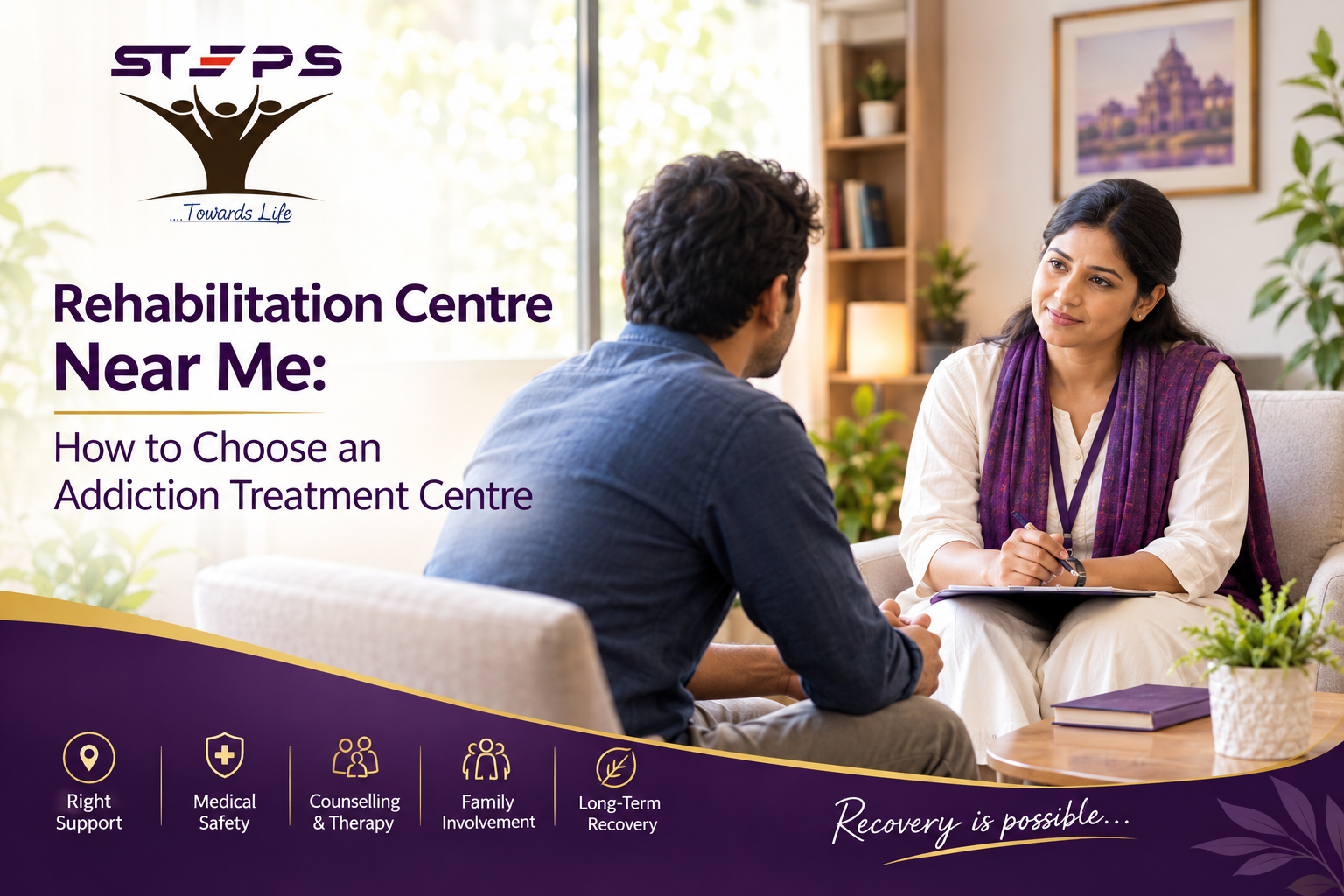
When addiction and mental health conditions occur together, treatment should consider both. The right approach depends on the person’s health, substance use history, symptoms, and support system.
1. Medically supervised detoxification
Some people need medical support to manage withdrawal safely. Detoxification may be an initial step, but it is not a complete treatment for addiction by itself.
People who drink heavily or regularly should seek medical advice before stopping suddenly because alcohol withdrawal can be dangerous.
2. Counselling and psychotherapy
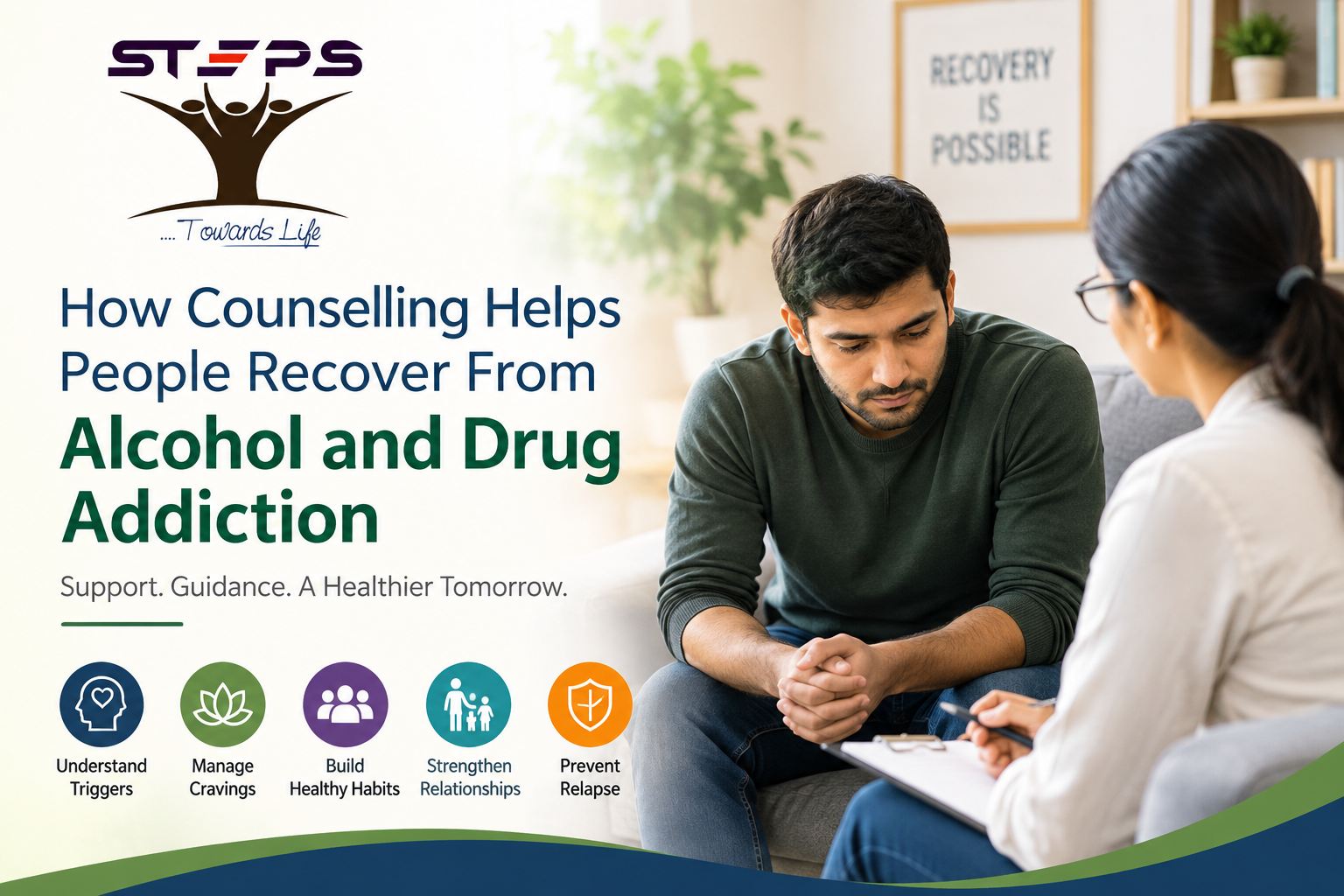
Individual counselling can help people understand triggers, manage emotions, build coping skills, and work toward personal recovery goals. Depending on the assessment, a clinician may recommend approaches such as cognitive behavioural therapy.
3. Mental health treatment
When anxiety, depression, trauma-related symptoms, or another mental health condition is present, appropriate treatment may include psychotherapy, medication, or specialist psychiatric care.
Medication should be prescribed and monitored by a qualified clinician.
4. Family counselling and recovery support
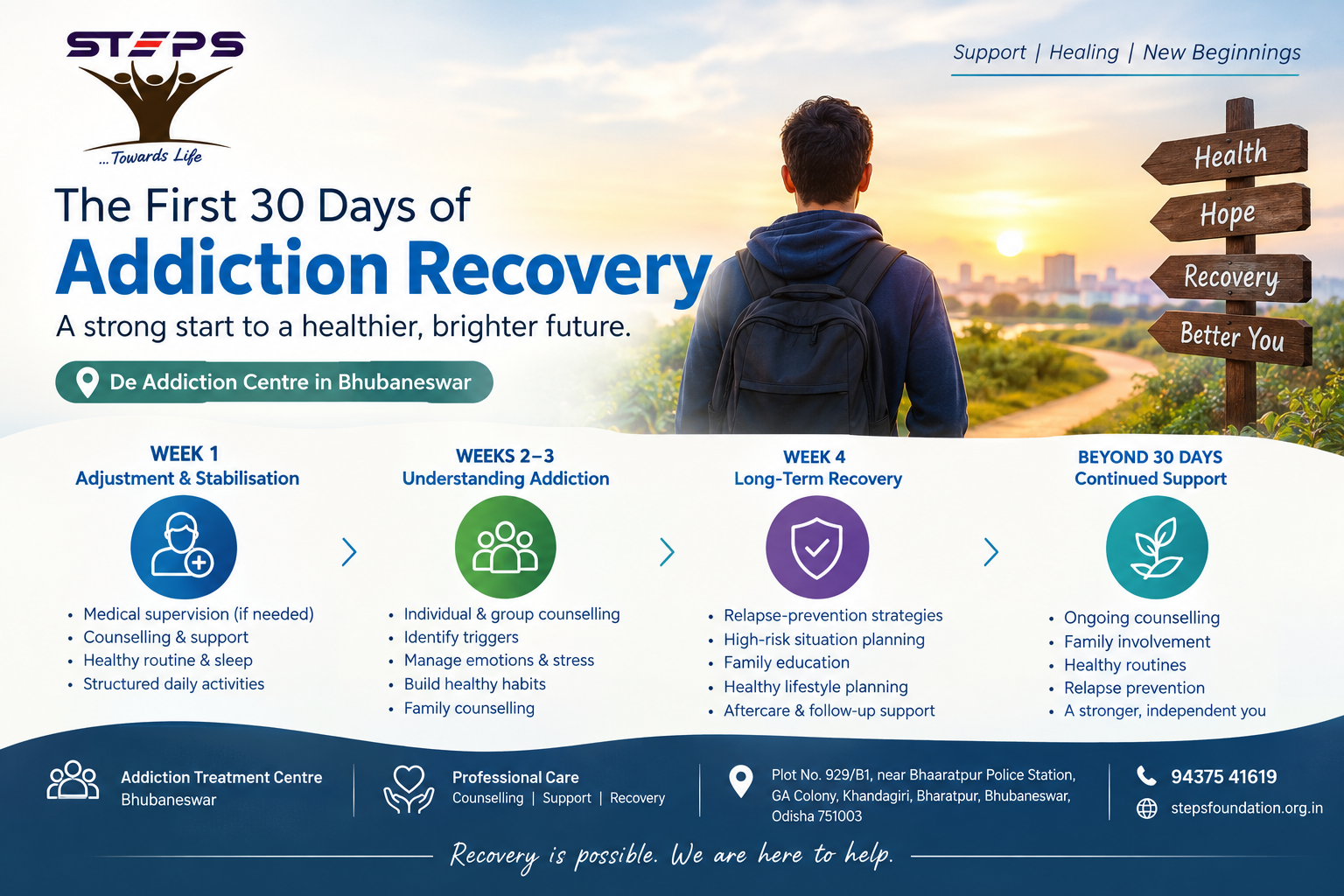
Family members may need guidance on communication, boundaries, and supporting recovery without blame or shame. Support groups and structured rehabilitation programmes can also help people develop healthier routines and reduce relapse risks.
A personalised plan may combine several approaches. Recovery is often a gradual process, and setbacks should prompt reassessment and support rather than judgement.
Prevention and Lifestyle Tips
Lifestyle changes cannot replace professional treatment when it is needed, but they can support emotional well-being and recovery.
- Maintain a routine: Aim for regular sleep, balanced meals, and manageable daily activities.
- Learn healthy coping skills: Try relaxation exercises, breathing practices, journaling, or other activities that help manage stress.
- Stay connected: Build relationships with supportive friends, family members, or recovery communities.
- Avoid substance-related triggers: Identify situations, people, or environments that make it harder to maintain recovery.
- Follow professional advice: Attend counselling sessions and take prescribed medication as directed.
- Ask for help early: Seek support when mood changes, cravings, or substance use become difficult to manage.
Families can help by listening calmly, avoiding shame or threats, and encouraging professional assessment.
Myths vs. Facts
Myth: Addiction is simply a lack of willpower.
Fact: Addiction is a complex health condition influenced by biological, psychological, and social factors.
Myth: People must treat addiction first and ignore mental health concerns until later.
Fact: When both conditions are present, coordinated care can address them together or in a clinically appropriate sequence.
Myth: Someone with addiction cannot recover.
Fact: Recovery is possible. The treatment pathway and time needed vary from person to person.
Myth: Family members are responsible for causing addiction.
Fact: Family relationships can be affected by addiction, but blaming relatives does not help. Families can play a valuable role in supporting treatment and recovery.
Frequently Asked Questions
1. Can addiction cause anxiety or depression?
Yes. Substance use can contribute to anxiety, low mood, and other emotional difficulties. Withdrawal and disrupted sleep may also affect mood. A professional assessment can help clarify the causes.
2. Can mental health problems lead to addiction?
Mental health difficulties may increase vulnerability when someone uses alcohol or drugs to cope. However, this does not happen to everyone, and addiction usually involves several interacting factors.
3. What is dual diagnosis?
Dual diagnosis commonly refers to the co-occurrence of a substance use disorder and a mental health condition. Treatment should consider both conditions and the way they affect each other.
4. Can addiction and mental health conditions be treated together?
Yes. Depending on the person’s needs, treatment may combine medical care, counselling, psychiatric support, rehabilitation, and ongoing recovery planning.
5. When should a family seek professional help?
Seek help when substance use becomes difficult to control, affects health or relationships, or occurs alongside persistent emotional distress. Seek emergency care for severe withdrawal symptoms, overdose concerns, or immediate risk of self-harm.
Summary: Recovery Starts With Understanding
Addiction and mental health are closely connected, but every person’s experience is different. Emotional difficulties may contribute to substance use, while alcohol and drugs can worsen mental well-being. In many cases, both concerns need attention.
Recognizing the warning signs, seeking professional assessment, and building a personalised treatment plan can help people move toward a healthier life. Compassion, patience, and continued support matter throughout recovery.
Take the First Step Toward Support
If you or someone in your family is struggling with alcohol or drug use, anxiety, depression, or related emotional difficulties, consider speaking with a qualified healthcare professional.
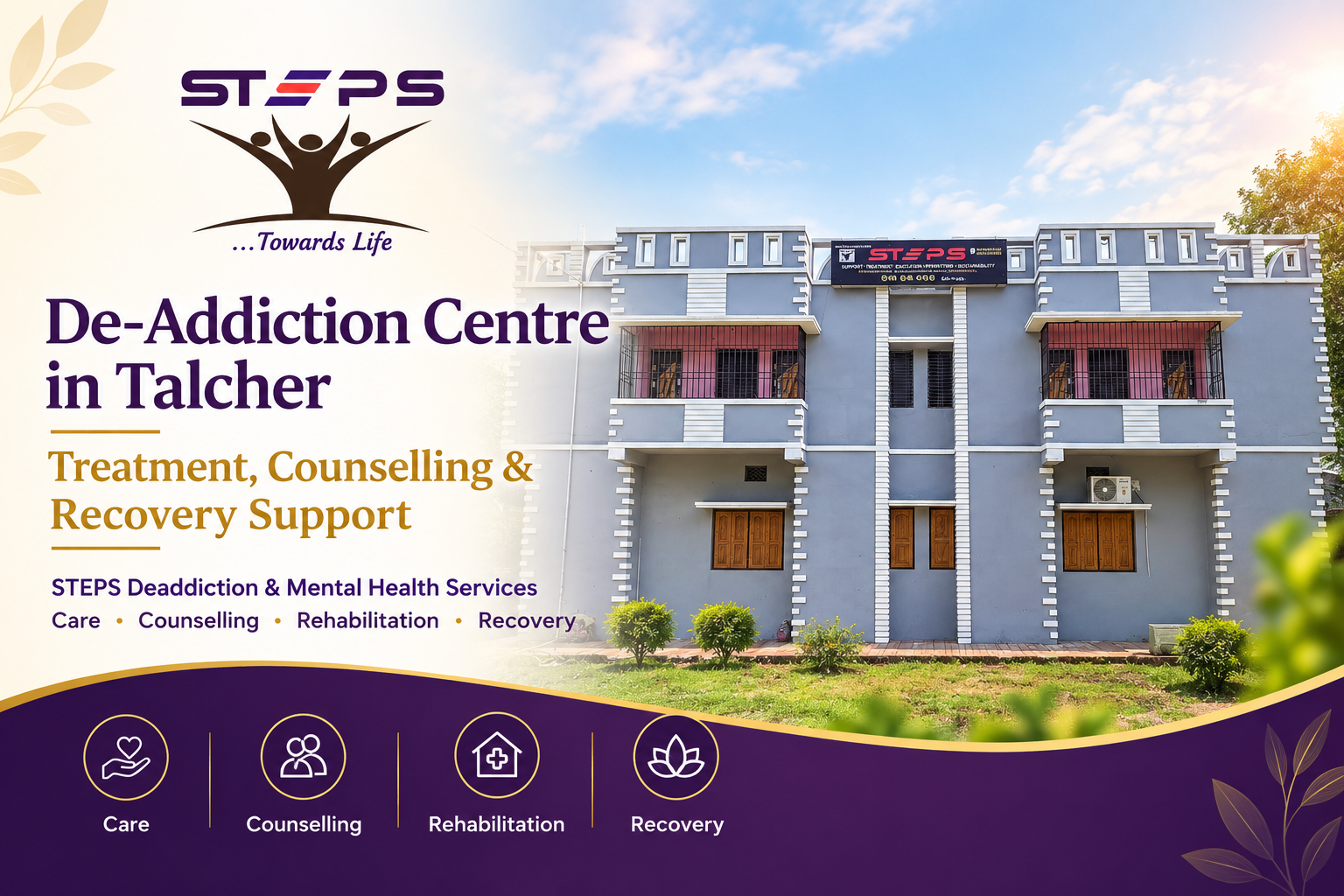
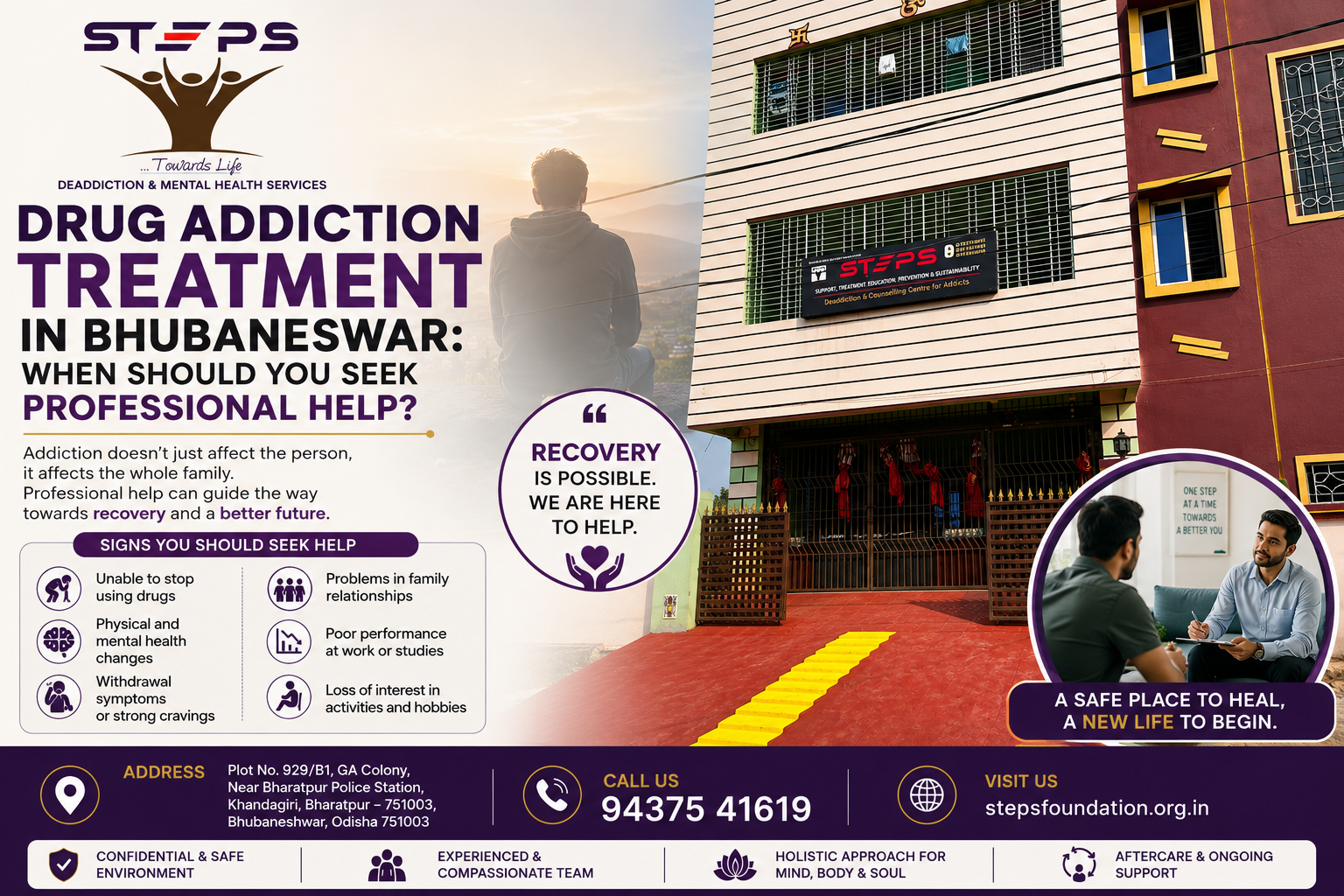
STEPS Deaddiction & Mental Health Services provides rehabilitation-focused support and mental health services in Odisha, including Bhubaneswar and Talcher. Contact the team to discuss available services and whether an assessment may be appropriate for your situation.
Seeking help is not a sign of weakness. It is a positive step toward understanding the problem and exploring the right support.