
Addiction can affect a person’s physical health, emotional well-being, relationships, work and family life. Alcohol and drug dependence are not simply matters of willpower. Recovery may require professional assessment, counselling, structured rehabilitation, family support and continued care.
For individuals and families searching for a de-addiction centre in Talcher, understanding what treatment involves can make the first step less confusing.
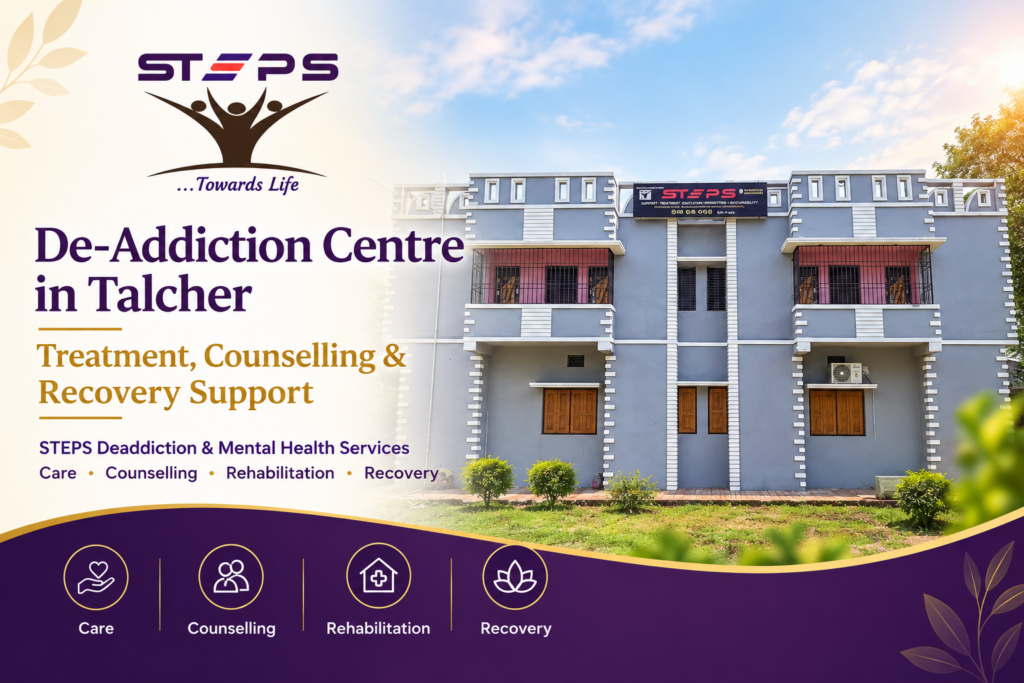
At STEPS Deaddiction & Mental Health Services, Talcher, the focus is on providing a supportive environment for people seeking help with alcohol and drug dependence, while also paying attention to psychological and emotional well-being.
Evidence-based treatment approaches commonly include assessment, psychosocial interventions, counselling, rehabilitation and continuing recovery support. WHO and UNODC emphasize that treatment for drug-use disorders should be comprehensive, ethical, voluntary where appropriate, and connected to continuing care and social reintegration.
What Is a De-Addiction Centre?
A de-addiction centre is a treatment setting that helps people address problems associated with alcohol or drug use.
Depending on an individual’s needs, treatment may involve:
- Initial assessment
- Medical evaluation
- Withdrawal and detoxification support when clinically appropriate
- Individual counselling
- Group sessions
- Family counselling
- Psychological support
- Behavioural interventions
- Relapse-prevention planning
- Healthy routine development
- Social and family reintegration
- Continuing or aftercare support
Treatment should not be identical for everyone. The appropriate level and duration of care depend on the person’s substance use, physical and psychological condition, treatment history, family situation and other individual needs.
WHO describes rehabilitation as a longer-term process that can combine medical, psychosocial and recovery-oriented approaches in residential, outpatient and community settings.
Why Professional Addiction Treatment Matters
Many families initially try to manage addiction at home. While family encouragement is important, some situations require professional support.
Alcohol or drug dependence may involve withdrawal symptoms, cravings, changes in behaviour, emotional difficulties and problems maintaining everyday responsibilities.
Professional treatment can provide a structured environment where the person can work on recovery with appropriate supervision and support.
WHO’s guidance on alcohol-use disorders includes screening, management of alcohol withdrawal, relapse prevention and psychosocial interventions among the components of care.
For some people, residential rehabilitation can also provide distance from environments, routines or situations that have been closely associated with substance use.
Addiction Treatment at a De-Addiction Centre in Talcher
A structured treatment programme may include several stages.
1. Initial Assessment
Treatment begins with understanding the individual’s situation.
An assessment may consider:
- Substance being used
- Frequency and duration of use
- Previous attempts to stop
- Withdrawal history
- Physical health
- Mental and emotional well-being
- Family and social circumstances
- Work or educational situation
- Previous treatment and relapse history
This information helps professionals determine what type of support may be appropriate.
2. Detoxification and Withdrawal Support
Some people experience withdrawal symptoms when they suddenly stop using alcohol or certain drugs.
Withdrawal can sometimes become medically serious, particularly with alcohol or certain substances. For this reason, detoxification should not automatically be treated as something that can be managed without professional assessment.
A de-addiction programme may therefore begin with appropriate medical evaluation and withdrawal management when required.
Detoxification is only one part of recovery. Completing detox does not by itself address the psychological, behavioural and social factors associated with addiction.
3. Individual Counselling
Counselling provides an opportunity for individuals to discuss their experiences in a confidential and supportive setting.
Counselling may explore:
- Triggers for substance use
- Cravings
- Stress
- Emotional difficulties
- Family relationships
- Negative thought patterns
- Behavioural patterns
- Motivation for change
- Coping strategies
- Relapse warning signs
Psychological interventions are an important part of treatment for substance-use disorders, and WHO guidance includes psychosocial approaches among evidence-based treatment options.
4. Group Counselling and Interactive Sessions
Recovery does not always have to happen in isolation.
Group-based sessions can allow people in recovery to learn from shared experiences while developing communication, coping and interpersonal skills.
Depending on the programme, group sessions may discuss:
- Understanding addiction
- Managing cravings
- Emotional regulation
- Healthy relationships
- Responsibility and accountability
- Relapse prevention
- Building a healthy routine
- Life after rehabilitation
WHO also identifies peer support groups and recovery-oriented services as potential components of continuing recovery management for adults with drug dependence.
5. Family Counselling
Addiction affects families as well as individuals.
Family members may experience worry, frustration, financial stress, conflict and uncertainty about how to respond.
Family counselling can help relatives understand:
- What addiction is
- How recovery works
- How to communicate more effectively
- How to establish healthy boundaries
- How to support treatment
- How to recognize possible relapse warning signs
- How to encourage continuing care
UNODC guidance emphasizes family support and reintegration as important elements within a broader continuum of treatment and recovery.
6. Mental Health and Emotional Well-Being
Substance use and mental health difficulties can occur together.
Some people experiencing addiction may also struggle with anxiety, depression, trauma, stress or other psychological difficulties. This is one reason an addiction treatment programme should look beyond substance use alone.
At STEPS, rehabilitation-focused care is combined with attention to mental and emotional well-being.
Where a person has significant or complex medical or psychiatric needs, appropriate specialist assessment or referral may be necessary. WHO and UNODC standards emphasize coordinated care and referral for people with additional health or psychiatric needs.
7. Relapse Prevention
Recovery is an ongoing process.
A person may complete a residential programme and still face challenges after returning home. Exposure to stress, old social environments, cravings or familiar routines can create difficulties.
Relapse-prevention work may focus on:
- Identifying personal triggers
- Recognizing early warning signs
- Developing healthy coping mechanisms
- Avoiding high-risk situations
- Building supportive relationships
- Maintaining healthy routines
- Continuing counselling when needed
- Involving family members appropriately
The aim is not simply to stop substance use temporarily but to develop skills and support systems that can help maintain recovery over time.
WHO notes that psychological and social interventions can contribute to rehabilitation and relapse prevention.
Who May Consider a De-Addiction Centre in Talcher?
Professional assessment may be worth considering when alcohol or drug use is beginning to interfere with everyday life.
Possible warning signs include:
- Repeated unsuccessful attempts to stop
- Increasing frequency or quantity of substance use
- Strong cravings
- Withdrawal symptoms
- Neglect of work or responsibilities
- Family or relationship problems related to substance use
- Financial difficulties caused by substance use
- Continuing to use despite harmful consequences
- Spending significant time obtaining, using or recovering from a substance
- Returning to substance use after previous attempts at recovery
A person does not have to wait until the situation becomes severe before asking for professional help.
Why Counselling Is an Important Part of Recovery
Addiction can become connected to thoughts, emotions, habits, relationships and environments.
Counselling can help a person understand these connections and develop healthier ways of responding.
For example, someone may discover that substance use frequently occurs after:
Stress → emotional discomfort → craving → substance use → temporary relief → negative consequences
Treatment can help the person recognize this pattern and develop alternative coping strategies.
The exact counselling approach should be selected according to the individual’s needs. WHO recommends several psychosocial interventions for different substance-use conditions, including approaches such as cognitive behavioural therapy in specific circumstances.
Recovery Is More Than Detoxification
One common misunderstanding is that detoxification equals recovery.
In reality, detoxification addresses withdrawal and stabilization. Long-term recovery may require additional work involving behaviour, emotional health, relationships, lifestyle and social reintegration.
A comprehensive recovery plan may therefore include:
Assessment → Stabilization/Detoxification → Counselling → Rehabilitation → Family Support → Relapse Prevention → Continuing Care
The appropriate sequence and intensity vary from person to person.
WHO and UNODC’s international standards emphasize a continuum of care rather than treating addiction as a single short intervention.
Choosing a De-Addiction Centre in Talcher
When families are searching for an Alcohol Rehabilitation Centre in Talcher or Drug Rehabilitation Centre in Talcher, several questions can help them understand whether a service is appropriate.
Consider asking:
Does the centre assess each person individually?
Treatment should take account of individual needs rather than assuming everyone requires the same programme.
Is professional support available?
Ask about the qualifications and roles of doctors, psychologists, counsellors and other treatment professionals.
How is withdrawal managed?
If someone is physically dependent on alcohol or another substance, ask what medical arrangements are available when withdrawal requires clinical supervision.
Is counselling included?
Counselling and psychosocial support are important components of many addiction-treatment programmes.
Is family involvement encouraged?
Family education and counselling can support recovery and reintegration.
Is there a continuing-care plan?
Recovery support should ideally extend beyond the initial treatment period when appropriate.
WHO and UNODC recommend treatment systems that integrate different levels of health, psychological and social care and provide continuity of support.
STEPS Deaddiction & Mental Health Services in Talcher
STEPS Deaddiction & Mental Health Services provides rehabilitation-focused support for individuals seeking help with alcohol and drug dependence in Talcher, Odisha.
The centre’s approach focuses on creating a structured and supportive environment where individuals can work toward recovery with counselling, rehabilitation and family-oriented support.
Services may include:
- Addiction assessment
- Alcohol and drug recovery support
- Counselling
- Family counselling
- Group and interactive sessions
- Relapse-prevention support
- Mental and emotional well-being support
- Healthy routine and lifestyle development
- Rehabilitation and continuing recovery support
The goal is to approach recovery with care, patience, dignity and compassion.
For individuals or families looking for a De-Addiction Centre in Talcher, seeking professional guidance early can be an important first step.
Take the First Step Toward Recovery
Addiction can affect many areas of life, but asking for help is a meaningful beginning.
If you or someone in your family is struggling with alcohol or drug dependence, consider speaking with a qualified healthcare or addiction-treatment professional about the available options.
STEPS Deaddiction & Mental Health Services
📍 Near Baghuabol Shiva Mandira, Talcher, Odisha – 759100
📞 9938781619
Recovery takes time. With appropriate treatment, professional guidance, family support and continuing care, individuals can work toward healthier and more stable lives.
Frequently Asked Questions
1. What does a de-addiction centre in Talcher provide?
A de-addiction centre may provide assessment, withdrawal or detoxification support when appropriate, counselling, rehabilitation, family support, relapse-prevention planning and continuing-care services.
2. Is counselling necessary for addiction recovery?
Counselling is an important component of many addiction-treatment programmes. It can help individuals understand triggers, develop coping strategies and work on behavioural and emotional challenges.
3. Can alcohol addiction be treated?
Yes. Alcohol-use disorder is treatable, although treatment needs vary between individuals. Depending on the situation, care may include withdrawal management, psychosocial interventions, counselling, medication where clinically appropriate and continuing support.
4. How long does rehabilitation take?
There is no single treatment duration that is appropriate for everyone. Treatment duration should be based on individual needs, clinical condition, progress and the type of support required. WHO guidance emphasizes individualized treatment rather than a universal fixed duration.
5. Can family members participate in addiction treatment?
Yes. Family education and counselling can be valuable parts of recovery, particularly when family relationships and reintegration are relevant to the person’s treatment plan.
6. Is relapse a sign that treatment has failed?
Relapse can occur during recovery and indicates that additional assessment or changes in the recovery plan may be needed. Continuing care, relapse-prevention strategies and appropriate professional support can be important parts of long-term recovery.