

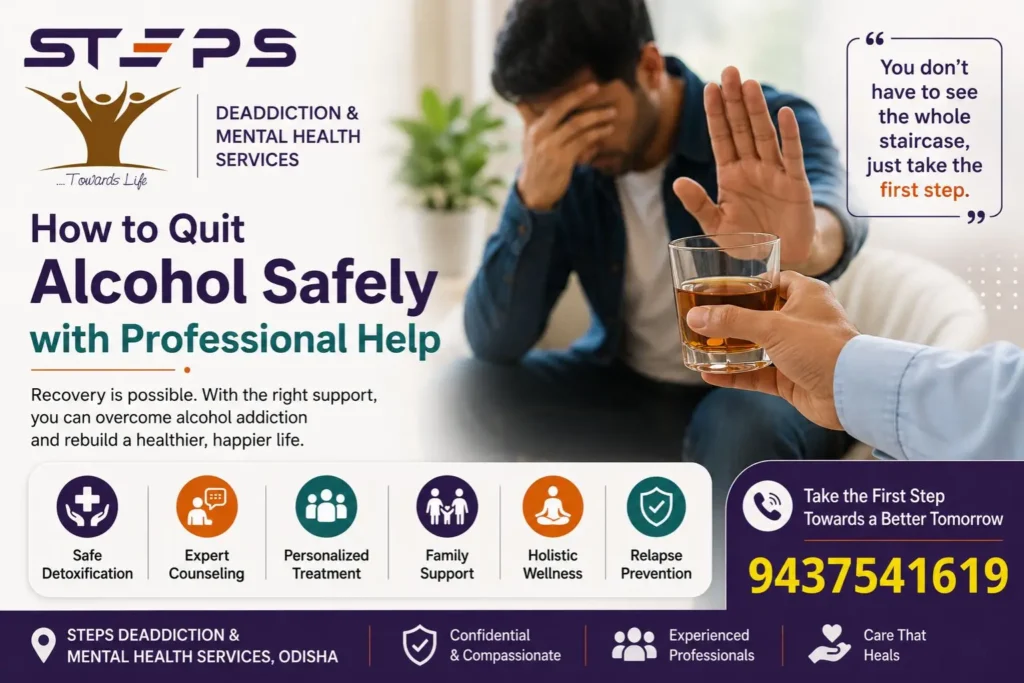
Alcohol addiction can affect every aspect of a person’s life, including physical health, mental well-being, relationships, career, and overall quality of life. While many people recognize the need to stop drinking, quitting alcohol without proper support can be challenging and, in some cases, dangerous.
Understanding how to quit alcohol safely with professional help is an important step toward recovery. Professional treatment provides medical supervision, emotional support, counseling, and relapse prevention strategies that help individuals achieve lasting sobriety.
At STEPS Deaddiction & Mental Health Services, we believe recovery is possible with the right guidance, care, and commitment.
Why Quitting Alcohol Can Be Difficult
Alcohol dependence develops gradually over time. Regular alcohol consumption can change brain chemistry, making it difficult for individuals to stop drinking without experiencing cravings and withdrawal symptoms.
Common reasons people struggle to quit include:
- Physical dependence on alcohol
- Fear of withdrawal symptoms
- Emotional attachment to drinking
- Stress, anxiety, or depression
- Social influences and triggers
- Lack of support systems
Professional treatment helps address both the physical and psychological aspects of alcohol addiction.
Understanding Alcohol Withdrawal
When a person who is dependent on alcohol suddenly stops drinking, the body may react through withdrawal symptoms.
Common alcohol withdrawal symptoms include:
- Anxiety and restlessness
- Sweating
- Tremors or shaking
- Headaches
- Nausea and vomiting
- Difficulty sleeping
- Increased heart rate
- Mood changes
In severe cases, withdrawal may lead to serious medical complications, making professional supervision highly important.
Why Professional Help Matters
Many people attempt to quit alcohol on their own but find it difficult to maintain long-term sobriety.
Professional treatment provides:
Medical Supervision
Healthcare professionals monitor withdrawal symptoms and ensure safety during the detoxification process.
Personalized Treatment Plans
Every individual’s recovery journey is different. Treatment plans are tailored to specific needs and circumstances.
Counseling and Therapy
Therapy helps individuals understand the underlying causes of alcohol use and develop healthier coping mechanisms.
Emotional Support
Recovery can be emotionally challenging. Professional support helps individuals stay motivated and focused on their goals.
Relapse Prevention
Learning how to manage triggers and cravings is essential for maintaining sobriety.
Steps to Quit Alcohol Safely
1. Acknowledge the Problem
The first step toward recovery is recognizing that alcohol use is negatively affecting your life.
Signs may include:
- Difficulty controlling drinking
- Relationship conflicts
- Health concerns
- Work or academic problems
- Increased alcohol tolerance
Acknowledging the need for help is a powerful step toward change.
2. Seek Professional Assessment
A professional evaluation helps determine:
- The severity of alcohol dependence
- Mental health concerns
- Physical health conditions
- Appropriate treatment options
This assessment forms the foundation of a personalized recovery plan.
3. Undergo Safe Detoxification
Detoxification is the process of removing alcohol from the body.
Professional detox provides:
- Medical monitoring
- Symptom management
- Emotional support
- Increased safety during withdrawal
A supervised detox program can significantly reduce the risks associated with alcohol withdrawal.
4. Participate in Counseling and Therapy
Therapy is a key component of successful recovery.
Treatment may include:
- Individual counseling
- Cognitive Behavioral Therapy (CBT)
- Group therapy
- Family counseling
- Stress management techniques
These approaches help individuals address emotional challenges and develop healthier habits.
5. Build a Strong Support System
Recovery is easier when individuals have supportive people around them.
Support may come from:
- Family members
- Friends
- Counselors
- Recovery groups
- Healthcare professionals
A strong support network helps reduce feelings of isolation and increases accountability.
6. Develop Healthy Lifestyle Habits
Lifestyle changes can strengthen recovery and improve overall well-being.
Helpful habits include:
- Regular exercise
- Healthy nutrition
- Adequate sleep
- Mindfulness practices
- Stress management
- Engaging in positive hobbies
Healthy routines support both physical and mental recovery.
The Connection Between Mental Health and Alcohol Addiction
Many individuals struggling with alcohol addiction also experience:
- Anxiety
- Depression
- Trauma
- Chronic stress
- Emotional difficulties
Addressing these underlying issues is essential for long-term recovery.
Integrated treatment focuses on both alcohol addiction and mental health, helping individuals achieve sustainable wellness.
Benefits of Professional Alcohol Addiction Treatment
Professional treatment offers numerous benefits:
Increased Safety
Medical supervision helps manage withdrawal risks.
Better Recovery Outcomes
Structured treatment improves the likelihood of long-term sobriety.
Improved Mental Health
Addressing emotional challenges supports overall recovery.
Stronger Relationships
Recovery often helps rebuild trust and improve family connections.
Enhanced Quality of Life
Individuals frequently experience better physical health, emotional stability, and personal fulfillment.
Why Choose STEPS Deaddiction & Mental Health Services?
At STEPS Deaddiction & Mental Health Services, we provide compassionate and personalized care for individuals seeking recovery from alcohol addiction.
Our approach focuses on:
- Safe and supportive treatment
- Individualized recovery plans
- Mental health support
- Family involvement
- Relapse prevention strategies
- Long-term wellness and recovery
We are committed to helping individuals regain control of their lives and build a healthier future.
Conclusion
Learning how to quit alcohol safely with professional help can be the beginning of a life-changing journey. While overcoming alcohol addiction may seem difficult, recovery is possible with the right support and treatment.
Professional care provides the guidance, medical supervision, and emotional support needed to navigate recovery safely and successfully.
If you or a loved one is struggling with alcohol addiction, seeking professional help today can be the first step toward lasting recovery and a healthier tomorrow.
Frequently Asked Questions
Is it safe to quit alcohol suddenly?
For individuals with alcohol dependence, suddenly stopping alcohol can lead to withdrawal symptoms. Professional medical guidance is recommended to ensure safety.
What are the signs of alcohol addiction?
Common signs include increased tolerance, cravings, inability to control drinking, withdrawal symptoms, and alcohol-related problems in daily life.
How long does alcohol withdrawal last?
Withdrawal symptoms vary depending on the individual and severity of dependence. Professional assessment can help determine appropriate care.
Can counseling help with alcohol addiction?
Yes. Counseling helps individuals understand triggers, manage cravings, develop coping skills, and maintain long-term recovery.
Does STEPS provide alcohol addiction treatment in Odisha?
Yes. STEPS Deaddiction & Mental Health Services offers professional support for individuals seeking recovery from alcohol addiction and related mental health concerns in Odisha.
Can recovery improve mental health?
Yes. Many individuals experience improved emotional well-being, better sleep, reduced anxiety, and enhanced quality of life after successful recovery.