

Alcohol consumption is socially accepted in many settings, making it difficult to recognize when occasional drinking begins to develop into a serious problem. For many individuals and families, alcohol addiction does not happen overnight. It often develops gradually, with warning signs appearing long before the addiction becomes severe.
Understanding the signs of alcohol addiction can help individuals seek support early and prevent long-term physical, emotional, and social consequences. Early intervention often leads to more successful recovery outcomes and a healthier future.
At STEPS Deaddiction & Mental Health Services, we believe that awareness is the first step toward recovery. Recognizing the warning signs can make a life-changing difference for you or someone you love.
What Is Alcohol Addiction?
Alcohol addiction, also known as Alcohol Use Disorder (AUD), is a condition in which a person becomes unable to control their alcohol consumption despite experiencing negative consequences.
Over time, alcohol affects the brain’s reward system, making it increasingly difficult to stop drinking without support. As dependence develops, drinking may become a priority over health, family, work, and personal responsibilities.
Why Early Detection Matters
Many people ignore the early signs of alcohol addiction because they believe they are still in control. However, identifying the problem early can:
- Prevent severe health complications
- Reduce the risk of relationship breakdowns
- Improve mental well-being
- Increase the chances of successful recovery
- Minimize financial and professional consequences
The sooner treatment begins, the easier it may be to regain control.
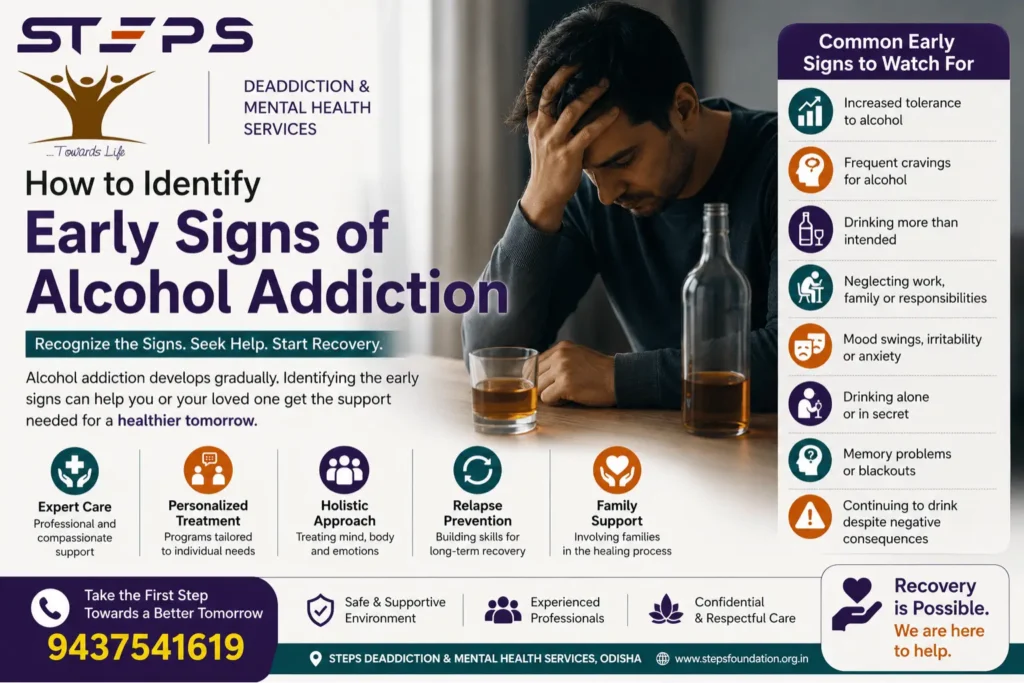
Early Signs of Alcohol Addiction
1. Increased Tolerance to Alcohol
One of the earliest warning signs is needing more alcohol to achieve the same effect.
A person may notice that:
- They can drink larger amounts without feeling intoxicated.
- They need stronger alcoholic beverages.
- Previous drinking limits no longer have the same impact.
Increased tolerance often indicates that the body is adapting to alcohol use.
2. Frequent Cravings for Alcohol
Cravings involve a strong urge or desire to drink.
Individuals may:
- Think about alcohol frequently.
- Feel restless when alcohol is unavailable.
- Look forward to drinking throughout the day.
- Use alcohol as a reward or stress reliever.
Persistent cravings can signal the beginning of dependence.
3. Drinking More Than Intended
Many individuals with developing alcohol problems intend to have only one or two drinks but end up consuming much more.
Common signs include:
- Difficulty stopping once drinking begins.
- Repeatedly exceeding planned limits.
- Losing track of alcohol consumption.
This loss of control is a significant warning sign.
4. Using Alcohol to Cope with Stress or Emotions
Alcohol is often used as a coping mechanism for:
- Anxiety
- Depression
- Stress
- Loneliness
- Relationship problems
- Work pressure
When alcohol becomes the primary way of managing emotions, dependence can develop quickly.
5. Neglecting Responsibilities
Alcohol addiction often begins affecting daily responsibilities.
Examples include:
- Missing work or school
- Reduced productivity
- Ignoring family obligations
- Poor academic performance
- Difficulty managing household responsibilities
These behavioral changes may indicate a growing problem.
6. Mood Swings and Personality Changes
Alcohol can significantly affect mood and behavior.
Warning signs may include:
- Increased irritability
- Sudden anger
- Anxiety
- Depression
- Emotional instability
- Social withdrawal
Family members often notice these changes before the individual does.
7. Drinking Alone or in Secret
As alcohol dependence develops, some individuals begin hiding their drinking habits.
This may involve:
- Drinking alone regularly
- Concealing alcohol bottles
- Lying about alcohol consumption
- Avoiding discussions about drinking habits
Secretive behavior can be a strong indicator of addiction.
8. Blackouts and Memory Problems
Alcohol-related blackouts occur when a person cannot remember events that happened while drinking.
Frequent memory lapses may include:
- Forgetting conversations
- Missing parts of the evening
- Difficulty recalling actions taken while intoxicated
These episodes should never be ignored.
9. Withdrawal Symptoms
Withdrawal symptoms can occur when alcohol use is reduced or stopped.
Common symptoms include:
- Shaking or tremors
- Sweating
- Anxiety
- Irritability
- Nausea
- Difficulty sleeping
Withdrawal often indicates physical dependence on alcohol.
10. Continuing to Drink Despite Negative Consequences
One of the clearest signs of alcohol addiction is continuing to drink even when it causes problems.
Examples include:
- Health complications
- Family conflicts
- Financial difficulties
- Workplace issues
- Legal problems
When alcohol use continues despite obvious harm, professional help may be necessary.
Physical Signs of Alcohol Addiction
In addition to behavioral changes, physical symptoms may include:
- Frequent fatigue
- Poor sleep quality
- Weight changes
- Red or puffy face
- Digestive problems
- Frequent headaches
- Declining personal hygiene
- Reduced energy levels
These symptoms may worsen as addiction progresses.
Mental Health and Alcohol Addiction
Alcohol addiction is often connected to mental health challenges such as:
- Anxiety disorders
- Depression
- Trauma
- Chronic stress
- Low self-esteem
Many individuals use alcohol to temporarily escape emotional pain. Unfortunately, long-term alcohol use often worsens mental health symptoms and creates a cycle that becomes difficult to break without treatment.
What Should You Do If You Notice These Signs?
If you recognize several of these signs in yourself or a loved one, consider taking action early.
Talk Openly
Approach the situation with compassion rather than judgment.
Seek Professional Assessment
A qualified professional can evaluate the severity of alcohol use and recommend appropriate treatment options.
Explore Treatment Options
Treatment may include:
- Medical detoxification
- Counseling and therapy
- Mental health support
- Family counseling
- Relapse prevention programs
Build a Support System
Recovery becomes easier with support from family, friends, and healthcare professionals.
How STEPS Deaddiction & Mental Health Services Can Help
At STEPS Deaddiction & Mental Health Services, we provide compassionate and evidence-based support for individuals struggling with alcohol addiction and related mental health concerns.
Our services include:
- Alcohol addiction treatment
- Mental health counseling
- Individual therapy
- Family support programs
- Relapse prevention planning
- Long-term recovery support
We are committed to helping individuals achieve lasting recovery and improved quality of life.
Conclusion
Recognizing the signs of alcohol addiction early can make a significant difference in recovery outcomes. Increased tolerance, cravings, mood changes, withdrawal symptoms, and loss of control are all warning signs that should not be ignored.
Recovery is possible, and seeking professional help early can prevent addiction from becoming more severe. If you or someone you love is struggling with alcohol use, professional support can provide the guidance and tools needed for lasting change.