
Begin your recovery journey today
STEPS Foundation offers a free, confidential first consultation at all three centres — Bhubaneswar, Baripada, and Talcher. No obligation. Complete support.
Call: +91 9437541619 | +91 9938781619
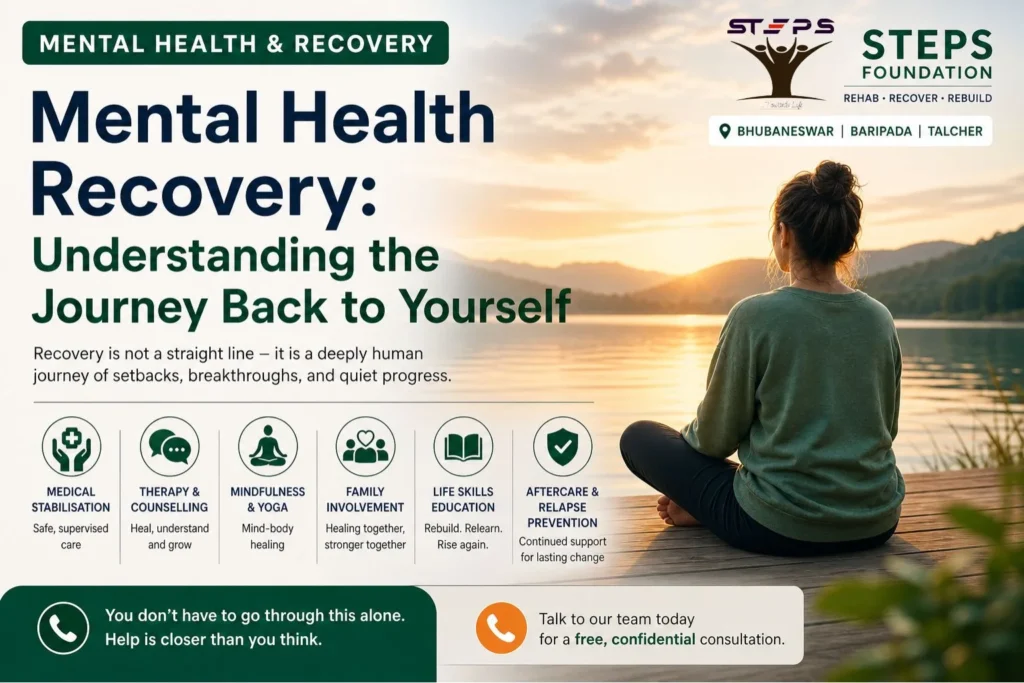
Recovery is not a straight line — it is a deeply human journey of setbacks, breakthroughs, and quiet progress. Whether you or someone you love is navigating substance use, emotional trauma, or co-occurring mental health challenges, understanding that process is the first and most courageous step.
What does mental health recovery actually mean?
Recovery is not simply the absence of symptoms. It is the gradual rebuilding of a life that feels worth living — one that includes purpose, connection, stability, and self-respect. For many individuals at our centres in Bhubaneswar, Baripada, and Talcher, recovery begins not with a dramatic turning point, but with a single honest conversation.
The World Health Organization defines mental health as a state of well-being in which a person realises their own abilities, can cope with the normal stresses of life, can work productively, and is able to contribute to their community. That definition holds especially true in the context of addiction and trauma recovery.
| “True freedom from addiction starts with understanding, compassion, and support. The journey inward is the most important one you will ever take.” |
Why mental health and addiction are deeply connected
Substance use and mental health conditions rarely travel alone. Research consistently shows that individuals struggling with alcohol or drug dependency often carry underlying anxiety, depression, PTSD, or trauma that was never properly addressed. At STEPS Foundation, our holistic Genesis programme treats both the addiction and the root emotional causes — because treating one without the other rarely leads to lasting recovery.
Common co-occurring conditions we see include depression, bipolar disorder, post-traumatic stress, and narcissistic abuse recovery. Recognising these overlaps is not a sign of weakness — it is essential clinical wisdom.
Six pillars of sustainable recovery
Recovery does not happen in isolation. It is built on consistent support across multiple dimensions of life. Here are the six pillars we work with at STEPS Foundation:
| # | Pillar | What it means |
| Pillar 1 | Medical stabilisation | Safe, supervised detox and 24/7 inpatient care to address withdrawal and physical health. |
| Pillar 2 | Therapy & counselling | Individual and group sessions to uncover emotional triggers and build healthier coping strategies. |
| Pillar 3 | Mindfulness & yoga | Evidence-based practices that rebuild the mind-body connection and reduce anxiety and cravings. |
| Pillar 4 | Family involvement | Healing the relational wounds that often fuel continued substance use and social isolation. |
| Pillar 5 | Life skills education | Rebuilding practical capabilities – work readiness, communication, financial awareness, routines. |
| Pillar 6 | Aftercare & relapse prevention | Personalised plans and continued support to protect the gains made during residential treatment. |
Warning signs that professional support is needed
It is not always easy to know when someone has crossed from recreational use or emotional struggle into something that requires structured help. Families often wait too long out of hope, shame, or uncertainty. Here are signals worth taking seriously:
| Signs to watch for • Withdrawal from family, friends, and daily responsibilities • Significant changes in sleep, appetite, or personal hygiene • Increased secrecy or defensiveness around substance use • Mood swings, emotional volatility, or episodes of paranoia • Failed attempts to stop or reduce use on their own • Loss of interest in previously valued activities and relationships • Continued use despite clear harm to health, work, or family |
Recovery in the Odia context
Mental health stigma remains a significant barrier across Odisha. Many families delay seeking help because of fear of social judgment, not knowing where to go, or believing that willpower alone should be enough. These beliefs — while understandable — can cost years of a person’s life.
At STEPS Foundation, we operate with full confidentiality and deep cultural sensitivity. Our teams in Bhubaneswar, Baripada, and Talcher understand the local language, the family dynamics, and the specific pressures our communities face. Recovery is not a privilege for those in urban centres alone — it is a right for every person in Odisha.
| “Asking for help is not weakness. In a society that tells people to stay silent about their struggles, choosing to speak up is one of the bravest things a person can do.” |
What families can do right now
If you are supporting a loved one, your own well-being matters too. Caregiver burnout is real, and your stability is part of their recovery. Some practical steps:
• Educate yourself on the nature of addiction as a health condition, not a moral failing.
• Set boundaries that protect your own mental health without abandoning the person.
• Seek our free first consultation to understand the right level of care.
• Remind yourself — and them — that recovery is genuinely possible. Thousands of individuals have rebuilt their lives through structured support.
The first step is always the hardest
Whether you are the person struggling, a worried parent, a spouse at their limit, or a sibling who has watched years of decline — the most important thing you can do today is take one small action. Make one call. Ask one question. Visit one page.
Recovery does not demand perfection. It only asks that you keep moving forward, one step at a time.