

Addiction is more than a physical dependence on alcohol, drugs, or harmful behaviors. It affects the mind, emotions, relationships, career, and overall quality of life. While detoxification and medical support are important parts of treatment, true recovery often begins when individuals address the emotional and psychological factors behind their addiction.
This is where therapy for addiction recovery plays a crucial role. Therapy helps individuals understand the root causes of substance use, develop healthier coping mechanisms, and build the confidence needed for long-term sobriety.
At STEPS Deaddiction & Mental Health Services, we believe recovery is about healing the whole person—not just overcoming addiction but also restoring emotional well-being and rebuilding a meaningful life.
Understanding Addiction Beyond Substance Use
Many people assume addiction is simply a lack of willpower. In reality, addiction is a complex condition influenced by biological, psychological, social, and environmental factors.
People may begin using substances for different reasons, including:
- Managing stress
- Coping with anxiety or depression
- Escaping emotional pain
- Dealing with trauma
- Handling relationship difficulties
- Seeking temporary relief from life’s challenges
Over time, repeated substance use changes brain chemistry, making it difficult to stop without support. Therapy helps individuals understand these patterns and create healthier alternatives.
Why Therapy Is Essential for Addiction Recovery
Recovery involves much more than stopping alcohol or drug use. Individuals must also learn how to manage emotions, handle stress, and navigate life without relying on substances.
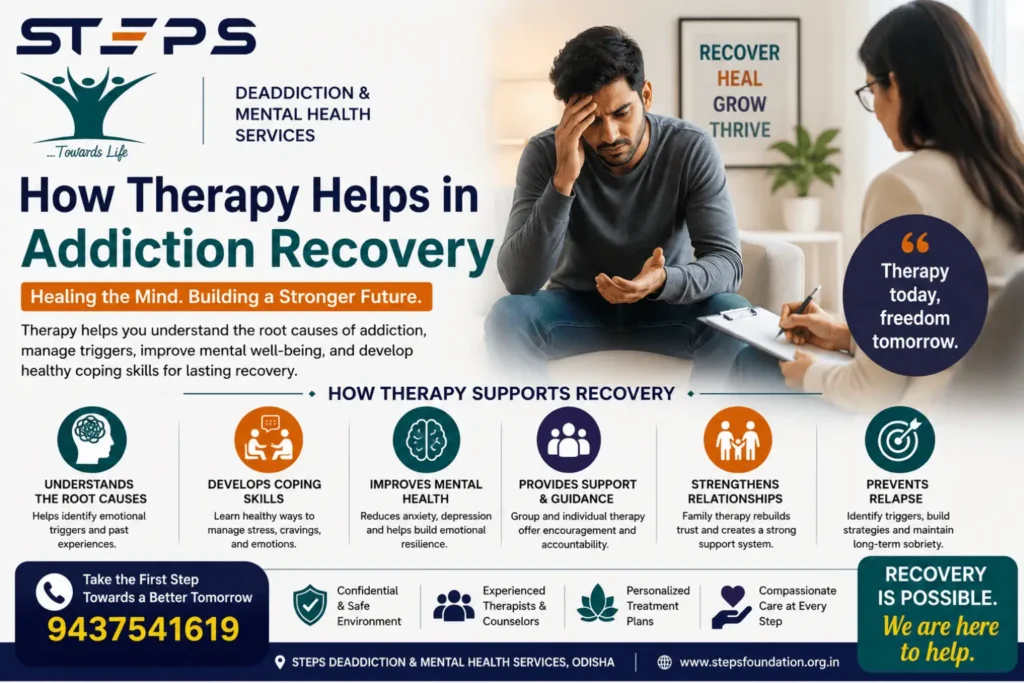
Therapy provides a safe and supportive environment where individuals can:
- Explore emotional challenges
- Understand addiction triggers
- Improve self-awareness
- Develop coping skills
- Strengthen relationships
- Build confidence in recovery
Without addressing these underlying issues, the risk of relapse often increases.
The Connection Between Mental Health and Addiction
Mental health and addiction are closely linked. Many individuals struggling with addiction also experience:
Anxiety Disorders
Persistent worry, panic attacks, and excessive stress can increase the risk of substance use.
Depression
Feelings of sadness, hopelessness, and low motivation may lead individuals to self-medicate with alcohol or drugs.
Trauma and PTSD
Past traumatic experiences can contribute significantly to addiction when emotional wounds remain unresolved.
Chronic Stress
Work pressure, financial difficulties, family responsibilities, and personal struggles can lead some people to seek temporary relief through substance use.
Therapy addresses these underlying mental health concerns, helping individuals recover more effectively.
Types of Therapy Used in Addiction Recovery
1. Individual Therapy
Individual therapy involves one-on-one sessions with a qualified counselor or therapist.
Benefits include:
- Personalized treatment
- Goal setting
- Emotional support
- Trigger identification
- Problem-solving skills
This approach allows individuals to discuss personal experiences in a confidential and supportive environment.
2. Cognitive Behavioral Therapy (CBT)
CBT is one of the most widely used and effective therapies for addiction recovery.
It helps individuals:
- Identify negative thought patterns
- Change unhealthy behaviors
- Develop healthy coping strategies
- Manage cravings
- Prevent relapse
CBT empowers individuals to make healthier decisions and respond differently to challenging situations.
3. Group Therapy
Group therapy brings together individuals facing similar recovery challenges.
Benefits include:
- Peer support
- Shared experiences
- Motivation
- Accountability
- Reduced isolation
Many individuals find comfort in knowing they are not alone in their recovery journey.
4. Family Therapy
Addiction affects the entire family system.
Family therapy helps:
- Improve communication
- Rebuild trust
- Resolve conflicts
- Educate loved ones about addiction
- Strengthen family support
A supportive family environment can significantly improve recovery outcomes.
5. Trauma-Informed Therapy
For individuals with a history of trauma, specialized therapy focuses on healing emotional wounds that may contribute to substance use.
Addressing trauma often helps reduce emotional distress and decreases the need to use substances as a coping mechanism.
How Therapy Helps Prevent Relapse
One of the biggest challenges in recovery is avoiding relapse. Therapy provides practical tools to manage situations that may trigger substance use.
Identifying Triggers
Triggers can include:
- Stress
- Anxiety
- Relationship conflicts
- Social pressure
- Certain environments
- Negative emotions
Therapy helps individuals recognize these triggers before they become overwhelming.
Developing Coping Skills
Instead of turning to substances, individuals learn healthier ways to manage emotions and stress through:
- Mindfulness techniques
- Relaxation exercises
- Problem-solving strategies
- Communication skills
Building Emotional Resilience
Therapy helps individuals develop confidence and resilience, making it easier to face life’s challenges without returning to substance use.
Benefits of Therapy for Addiction Recovery
Improved Mental Health
Therapy helps reduce symptoms of anxiety, depression, and emotional distress.
Better Self-Awareness
Understanding thoughts, emotions, and behaviors allows individuals to make healthier choices.
Stronger Relationships
Improved communication and emotional regulation strengthen personal and family relationships.
Increased Confidence
Achieving recovery milestones builds self-esteem and motivation.
Long-Term Recovery Success
Individuals who actively participate in therapy often have stronger relapse prevention skills and better long-term outcomes.
Common Challenges Therapy Helps Address
During recovery, individuals may struggle with:
- Guilt and shame
- Low self-esteem
- Anger management
- Relationship problems
- Stress management
- Emotional regulation
- Fear of relapse
Therapy provides guidance and practical strategies for overcoming these obstacles.
Why Professional Support Matters
Attempting to recover without professional support can be difficult. Addiction often involves deeply rooted emotional and behavioral patterns that require specialized care.
Professional therapists offer:
- Evidence-based treatment
- Objective guidance
- Emotional support
- Accountability
- Recovery planning
Their expertise helps individuals navigate challenges and maintain progress throughout recovery.
How STEPS Deaddiction & Mental Health Services Can Help
At STEPS Deaddiction & Mental Health Services, we provide comprehensive therapeutic support for individuals recovering from addiction and mental health challenges.
Our services include:
- Individual counseling
- Cognitive Behavioral Therapy (CBT)
- Family counseling
- Mental health support
- Relapse prevention programs
- Recovery-focused therapy
Our goal is to help individuals heal emotionally, rebuild confidence, and achieve lasting recovery.
Recovery Is a Journey, Not a Destination
Addiction recovery is an ongoing process that requires commitment, support, and personal growth. Therapy provides the tools necessary to navigate challenges, strengthen emotional well-being, and create a healthier future.
Every step taken in therapy is a step toward greater self-awareness, resilience, and freedom from addiction.
Ready to get started?
Therapy for addiction recovery is one of the most effective tools for achieving lasting sobriety and emotional healing. By addressing the underlying causes of addiction, managing mental health concerns, and building healthy coping skills, therapy empowers individuals to create meaningful and sustainable change.
Recovery is possible, and no one has to face it alone. With professional guidance, compassionate support, and a commitment to healing, individuals can overcome addiction and build a brighter future.
If you or a loved one is struggling with addiction, reaching out for professional help today could be the first step toward lifelong recovery.